CHINA Edition
 Hungarian Edition


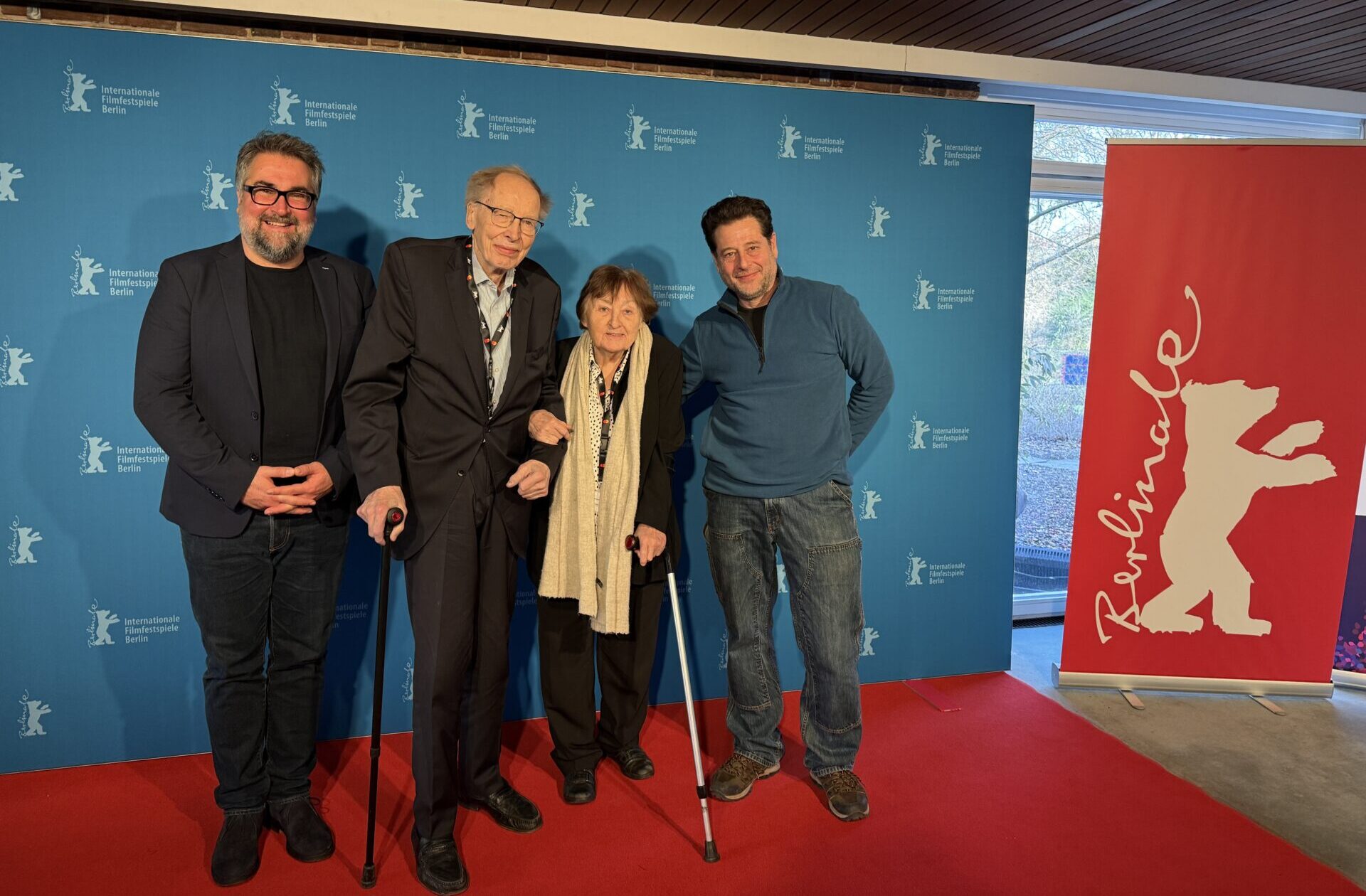
There are moments at film festivals when the newest premieres share space with the past in ways that feel less archival than revelatory. Within the Forum Special programme — long dedicated to rediscovery and reassessment — the restored films of Judit Elek returned on 15 February not as historical artifacts but as urgently contemporary works, resonating with new audiences decades after their original release. Introduced by Dr. Barbara Wurm at the Academy of Arts near Tiergarten, newly restored versions of A Hungarian Village / On The Fields of God (Istenmezején 1972–73-ban) and Encounter (Találkozás) positioned Elek’s cinema at the centre of a broader re-evaluation of overlooked voices in European film history.
Remembered as a “dear member of the forum community,” Elek was celebrated for a body of work that moved fluidly between documentary and fiction, merging rigorous observation with emotional precision. Istenmezején — named after a Hungarian village meaning “the field of God” — follows young women Ilonka and Marika navigating rural life in the 1970s, confronting choices between education and labour, early marriage and the uncertain promise of the city, all within entrenched patriarchal structures. After achieving international recognition with her debut The Lady from Constantinople at Cannes’ Semaine de la Critique, political circumstances halted her planned fiction projects, redirecting her toward documentary filmmaking. From this shift emerged Istenmezején 1972–73-ban and its sequel Egyszerű történet (A Commonplace Story) — works she later described as her most important. Originally screened in the Berlinale Forum in 1975, the film returned as both a historical milestone and a rediscovery following the director’s passing in October 2025.
Central to Elek’s legacy is a career defined by persistence in an industry that often discouraged women from directing. Advised early on to pursue editing instead, she continued with what was described as “stubbornness and persistence,” shaping a cinema that was deeply personal and political. “I became a filmmaker to be able to tell what I see around me,” she wrote, likening herself to “a female Don Quixote… not giving in.” After six decades of filmmaking, she reflected that her greatest hope was simple: that through her films she could reach and connect with audiences she had never met.
Behind this renewed visibility stands a sustained archival effort led by the National Film Institute Hungary, where restoration has evolved from a technical process into a cultural mission aimed at reconnecting audiences with works at risk of fading into obscurity. György Ráduly, Director of the Film Preservation and Technology Division at the National Film Institute (commonly referred as the National Film Archive) reflected on the process of bringing Judit Elek’s films back into circulation — and on the broader questions restoration raises about authorship, national cinema and the fragile continuity between past and present.
Two restored Judit Elek films
Referring to the screening of Judit Elek’s films in the Forum Special section and how he situates this moment within the broader history of Hungarian cinema, Ráduly said: “I think it’s a great recognition both for Hungarian cinema and for Judit Elek herself. Since 2023, major festivals have been showing her work, organizing retrospectives, and speaking about her life and career.”
The resurgence did not emerge overnight. It began, somewhat unexpectedly, with a publication project — an interview book produced collaboratively by German, Hungarian, and Dutch partners. What might have been a niche academic initiative became a catalyst, prompting curators and programmers to reconsider Elek’s body of work.
“The Rotterdam Film Festival was crucial. They screened several titles and requested digital copies. That was the moment when we decided to restore her complete body of work.”
From there, interest spread rapidly across the festival landscape. Cannes Classics selected The Lady from Constantinople, introducing Elek’s work to a new generation of cinephiles. Retrospectives followed at the Lumière Festival in Lyon, the Cinémathèque Française, and institutions throughout the United States. Berlinale’s Forum Special selection thus marks both recognition and continuation — a symbolic return to a festival historically associated with political cinema and Eastern European voices.

photo credit: Lucinda Douglas-Menzies
Resonating with younger generations
The screening was attended by younger audiences as well, Ráduly enthusiastically shared his thoughts on why he believes Elek’s work continues to connect across generations: “Judit belonged to a generation where filmmaking was deeply connected to social reality,” he explained. “She goes very deeply into her subjects.”
“She understood the people she filmed so well that they could behave naturally in front of the camera,” he said. “Sometimes you feel like they are actors — but they are not. That comes from total commitment.”
This observational intimacy contributes to the films’ contemporary resonance. While rooted in specific historical contexts, they explore universal questions about identity, family expectations, and social belonging.
“Whether you are in Australia, Japan, or Hungary, the emotional questions are the same,” he added. “That is why audiences today discover these films as something alive, not historical.”
The Forum’s Historic Legacy
Ráduly noted that “The Forum has a special place in film history,” referencing founders Ulrich and Erika Gregor, whose programming during the Cold War provided a platform for politically engaged filmmakers from Eastern Europe.
Elek’s return to Berlin decades after her earlier appearances feels almost cyclical. “The film comes back to Berlin decades later,” he said, suggesting a historical continuity that mirrors the archival process itself.
He also situated her within a lineage of Hungarian women filmmakers whose achievements have shaped festival history. “Márta Mészáros was the first woman to win the Golden Bear, and decades later Ildikó Enyedi also won. In fact, the only Hungarian Golden Bear winners are women. Judit’s recognition is part of that history.”
The film restoration process
Restoration begins with investigation rather than technology. “Every project starts with identifying original elements,” he explained. “Sometimes materials are incomplete, damaged, or dispersed across different collections.”
Choosing the right source material becomes an interpretive decision — balancing historical authenticity with technical feasibility.
Once scanning begins, digital tools allow for precise correction of scratches, color fading, or audio degradation. Yet the guiding principle remains fidelity rather than enhancement.
“If the camera trembles because it is handheld — that is part of the film’s language,” he said. “We do not want to make it artificially smooth. Restoration is about preserving identity, not modernising.”
Documentary works present additional challenges. Many were shot quickly, on smaller formats, often without ideal sound recording conditions.
“You have to accept the limits of the original production,” he explained. “Otherwise you risk rewriting history.”
The NFI’s Film Archive restoration strategy
When asked about the Hungarian Film Archive’s restoration strategy and how they prioritise which films to restore, Ráduly explained: “Back in 2017, we created a ten-year digitization and restoration strategy. We defined several criteria: first is preservation — films that are in physical danger must be saved immediately. Second are major milestones of Hungarian cinema history. Third are anniversaries or historical relevance. And another key factor is international demand — requests from festivals, distributors, or television channels.”
“The goal was to restore about 250 films over ten years. Today, nine years later, we’ve completed full restorations of more than 350 titles and digitized around 650 films in HD. So we’re already ahead of schedule.”
How modernisation and investment improved the Film Archive’s work
Ráduly gave a detailed account of how the NFI’s Film Archive was modernised since he took office: “When I arrived, the condition of the Archive itself presented a serious challenge. The building and preservation vaults required urgent stabilization, as temperature and humidity conditions were not adequate for long-term conservation. The first phase focused on safeguarding the collection physically; then we invested heavily in modernization, including acquiring advanced film scanners and new handling equipment. This transformed our capacity, enabling faster workflows and higher-quality restoration.”
“The integration between the Archive and the Film Lab also became essential: digitised materials move directly into digital restoration processes, and for certain culturally significant works we continue to produce new 35mm prints, celluloid has already proven its durability for over a century; digital storage is more fragile than people think.”
“Financially, this progress was possible because of sustained state investment and the integration of the archive within the National Film Institute. The reconstruction and modernization of the Archive’s buildings (the research center, the film vaults and the library) required substantial funding — approximately one billion forints for building stabilization and approximately the same amount for technical upgrades — while the annual digitisation and restoration programme now operates with a budget of around 500 million forints per year. This allows us to restore approximately 20–25 feature films annually alongside newsreels, documentaries and institutional works. Being part of the Film Institute ensures stable support and strategic alignment, which is not always the case internationally, and it has enabled us to build a dynamic and sustainable restoration ecosystem.”
The revival of analog
With the resurgence of interest in shooting on film in recent years, Ráduly discussed the NFI’s Film Lab and its operation and how that fits financially within that ecosystem: “The Film Lab operates differently from the National Film Archive. The Archive is a public collection funded by the state, but the Lab is an industrial entity within the National Film Institute. It receives no direct subsidies; it survives through market activity.”
“Of course, the Film Lab works very closely with Hungarian filmmakers, Hungarian productions and also many international productions — especially in the last four or five years. We have seen a significant increase in major international titles using our analogue and digital capacities, which is both a source of income and a strong indicator of the Lab’s growing reputation within the industry. High-profile award winning projects including productions like Poor Things, The Brutalist, Maria and projects associated with directors such as Ildikó Enyedi, László Nemes — reflect how the Hungarian infrastructure and technical expertise are increasingly integrated into the global production ecosystem. These collaborations bring prestige as well as practical opportunities, strengthening the Lab’s visibility among international partners.”
The challenge of generational knowledge transfer
When asked whether there is a risk of losing expertise and what steps can be taken to safeguard it, Ráduly was quick to acknowledge the current situation: “Yes — this is a major issue globally. Many highly specialised technicians are retiring, and for decades there was little training for new professionals.”
“A few years ago we began actively recruiting and training a new generation. Today we have many young team members aged between 20 and 30 working in research, film handling, and digital restoration. Students from Moholy-Nagy University, ELTE and SZFE are joining internships and learning archival practices.”
“People once told me it would be difficult to attract young talent because archival work was not fashionable. The opposite has happened. Young professionals are deeply motivated — they want to work with film heritage.”
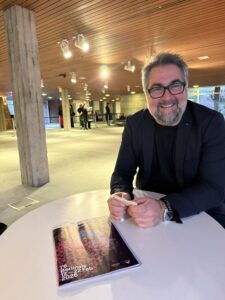
Photo credit: Andi Lustak
Outlook for the year ahead
Ráduly spoke very positive about what the organisation will be focusing on in 2026:
“We started the year very strongly, thanks to our international partners and that gives me real excitement for what lies ahead in 2026. At the beginning of the year we launched major retrospective programmes — including a Márta Mészáros retrospective and a focus on André de Toth, who is often thought of as a Hollywood filmmaker but was also deeply Hungarian. We restored five of his Hungarian films from the 1930s together with Martin Scorsese’s Film Foundation, and the Cinémathèque Française presented these newly restored versions, with another retrospective planned there in the coming months. At the same time, we are presenting restored works at Berlinale and other international festivals. Our strategy is very clear: we want Hungarian film heritage to be present at every major festival in the world, because visibility leads to recognition — recognition not only for individual films, but for our broader cinematic patrimony.”
“Like every year, we are proposing restored films to the Cannes Classics program. Last year was an important milestone when Sunshine and István Szabó were personally invited, which demonstrated that Hungarian restorations are now firmly on the international radar. “
“Beyond Cannes, Bologna remains essential for us as a key restoration-focused festival, and we will also return to the Lumière Festival in Lyon, where Thierry Frémaux highlighted the Budapest Classics Film Marathon as one of the three major restoration festivals worldwide alongside Bologna and Lyon itself. In 2025, Annecy International Animation Film Festival invited Hungarian Animation as the main guest and alongside the contemporary animation industry, we were present with a strong Hungarian animation heritage package. The Lumiere Festival’s International Classic Film Market also highlighted Hungary as a special guest showcasing NFI’s film preservation and film distribution activity. This year, we are continuing two major educational projects, both financed by Creative Europe. At the same time, we are working to sustain our collective European restored film broadcasting and promotional initiative, Season of Classic Films, which we launched seven years ago in collaboration with the Association of European Cinémathèques.”
Reflecting on Nine Years: Highlights and Proudest Achievements
When asked about his biggest achievements since he started at the NFI, Ráduly concluded:
“What makes me proudest over these nine years is that we truly built something from the ground up — but always as a collective team effort. The Hungarian Film Archive and the Film Lab have an extraordinary team, and the structure of the National Film Institute, with more than a hundred professionals working across different areas, made this rapid development possible.”
“I’m proud that Hungarian film heritage has gained international recognition again. Nine years ago many restored titles were almost invisible internationally. Today we work with cinemas, television channels, festivals, and educational programs across Hungary and abroad.
We created a national educational initiative that brings restored classics into schools — not just showing films but teaching students how to understand cinema within history and literature.”
“At the same time, our work continues to grow: the collection is expanding as we recover lost films, photographs, posters and other materials from abroad and from private collections. This means our next challenge is strengthening preservation infrastructure and long-term conservation capacity. We have achieved a great deal, but there is still much work ahead to ensure this heritage remains accessible for future generations.”