CHINA Edition
 Hungarian Edition


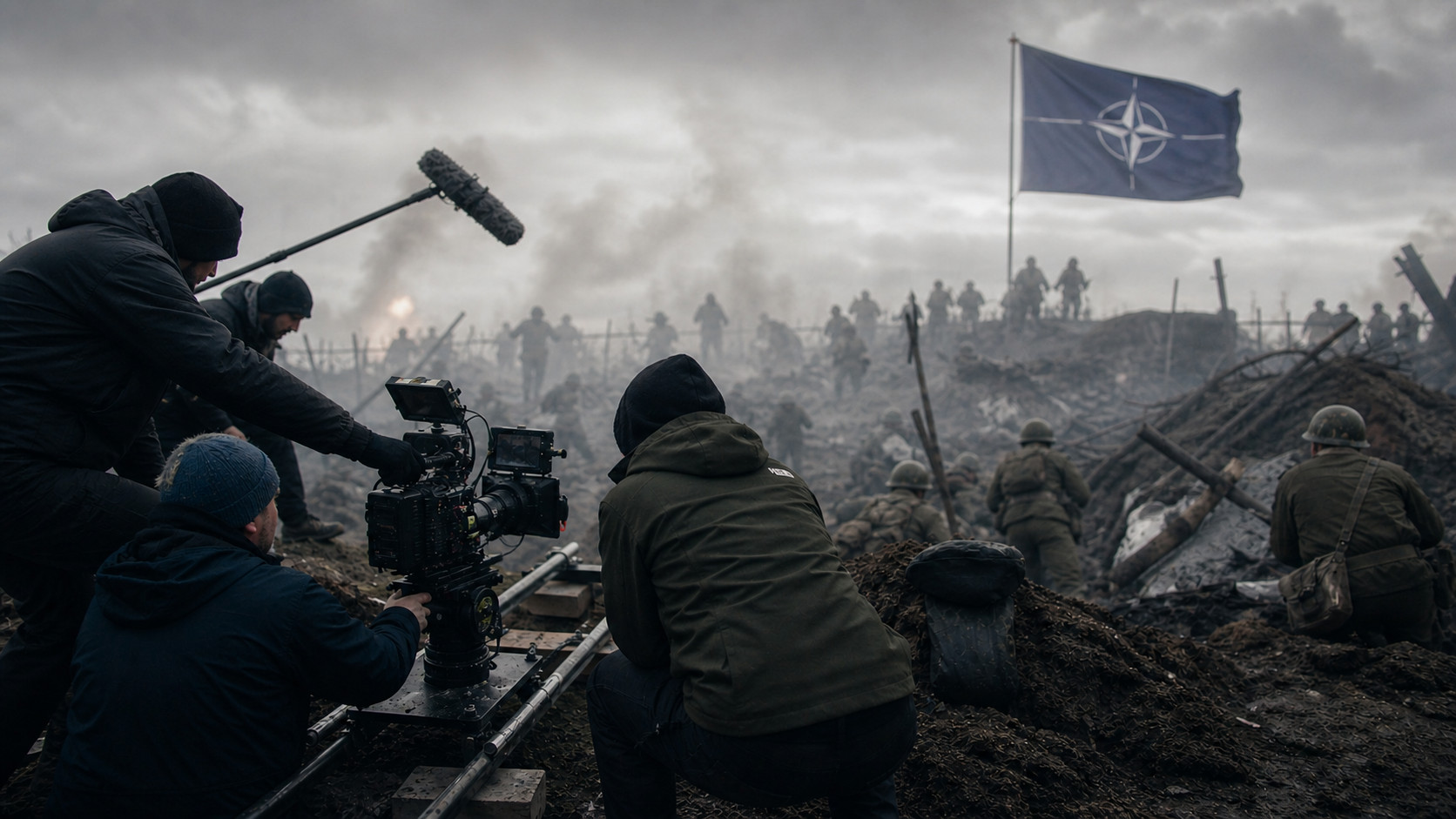
NATO is not a studio, a financier, or a streamer. But it is increasingly finding its way into the same rooms where stories are born.
Over the past year, the military alliance has hosted a series of closed-door sessions with screenwriters, directors, and producers in Los Angeles, Brussels, and Paris, with a London meeting next on the schedule. Conducted under the Chatham House Rule, the gatherings allow participants to use the information shared while keeping identities confidential, a structure more common to policy circles than writers’ rooms.
NATO’s stated aim is to brief creatives on “the changing security situation in Europe.” But the initiative has triggered a pointed backlash from within the industry, where some see the effort as less about education and more about influence.
Irish screenwriter Alan O’Gorman called the meetings “outrageous” and “clearly propaganda,” adding,
“I thought it was tone-deaf and crazy to present this as some kind of positive opportunity.”
Writer and producer Faisal A. Qureshi framed the concern in terms of perception and authority. “They have simply been given something that has the appearance of truth, provided by an authority that rarely deals with the public, and there is a sense of privilege regarding obtaining such access,” he said.
That sense of privileged access is precisely what makes the initiative so potent. According to an email cited by The Guardian, NATO believes the sessions have already inspired participants to pursue three different creative projects. In an industry where early-stage ideas are everything, that claim lands as more than incidental.
And it arrives at a moment when war stories are once again a central pillar of the global production pipeline.
One of the most prominent examples currently in motion is Alone at Dawn, a large-scale war drama directed by Ron Howard. The film stars Adam Driver as Medal of Honor recipient John Chapman, alongside Anne Hathaway, and dramatizes the Battle of Takur Ghar during the Afghanistan war. Backed by Amazon MGM Studios, the project is positioned as a major prestige release, expected to land in late 2026 or early 2027.
The film is emblematic of a broader trend: studios and streamers investing in narratives that revisit recent military conflicts with a mix of realism, heroism, and psychological depth. These are stories that rely heavily on authenticity, often built through research, consultation, and access to institutional knowledge.
That is where NATO’s outreach becomes particularly relevant.
This is not the alliance’s first interaction with the entertainment community. In 2024, a group of Hollywood screenwriters participated in a delegation to NATO headquarters organized by the Center for Strategic and International Studies. The trip included briefings with senior officials, exposure to military exercises, and conversations with Ukrainian soldiers. Participants described the experience as “overwhelming,” underscoring the emotional and informational impact such access can provide.
Historically, the relationship between the film industry and military institutions has been both practical and transactional. Productions have long relied on military advisors, equipment access, and logistical support. What feels different in the current moment is the shift upstream, toward the development phase, where ideas are still fluid and narratives are being shaped.
The ethical tension lies in that early access point.
On one hand, filmmakers seek accuracy. War stories, in particular, demand a level of detail and credibility that often requires direct engagement with experts. On the other hand, when that access comes from an institution with a clear geopolitical stake, questions arise about how that information is framed, and how it might influence the stories that emerge.
The use of the Chatham House Rule complicates matters further. While it encourages open dialogue, it also removes a layer of accountability. Audiences watching a future film or series will have no way of knowing whether, or how, narratives were shaped by off-the-record conversations with military or political entities.
For studios and streamers, the issue is not purely philosophical. War-related content remains commercially viable, often attracting awards attention and global viewership. Projects like Alone at Dawn signal continued appetite for stories rooted in real-world conflict, particularly those that balance spectacle with character-driven drama.
If NATO’s sessions are indeed influencing early-stage development, even indirectly, that influence could ripple through these kinds of projects that get greenlit, financed, and ultimately produced.
At the same time, dismissing the initiative outright as propaganda risks oversimplifying a more complex dynamic. Access does not automatically equal control. Writers and directors are not passive recipients; they interpret, challenge, and reshape the material they encounter.
The real question is whether the balance of power remains intact.
Can creatives engage with institutions like NATO without absorbing their framing? Can they maintain critical distance while benefiting from insider access? And perhaps most importantly, can audiences trust that the stories they are watching are driven by artistic intent rather than subtle alignment with institutional narratives?
As NATO prepares for its next meeting in London, in collaboration with the Writers Guild of Great Britain, those questions are only becoming more pressing.
Because in today’s content ecosystem, influence rarely arrives as a directive. It arrives as access, as information, as an invitation into the room.
And once you are in that room, what you do with what you hear may shape far more than a single script.