CHINA Edition
 Hungarian Edition


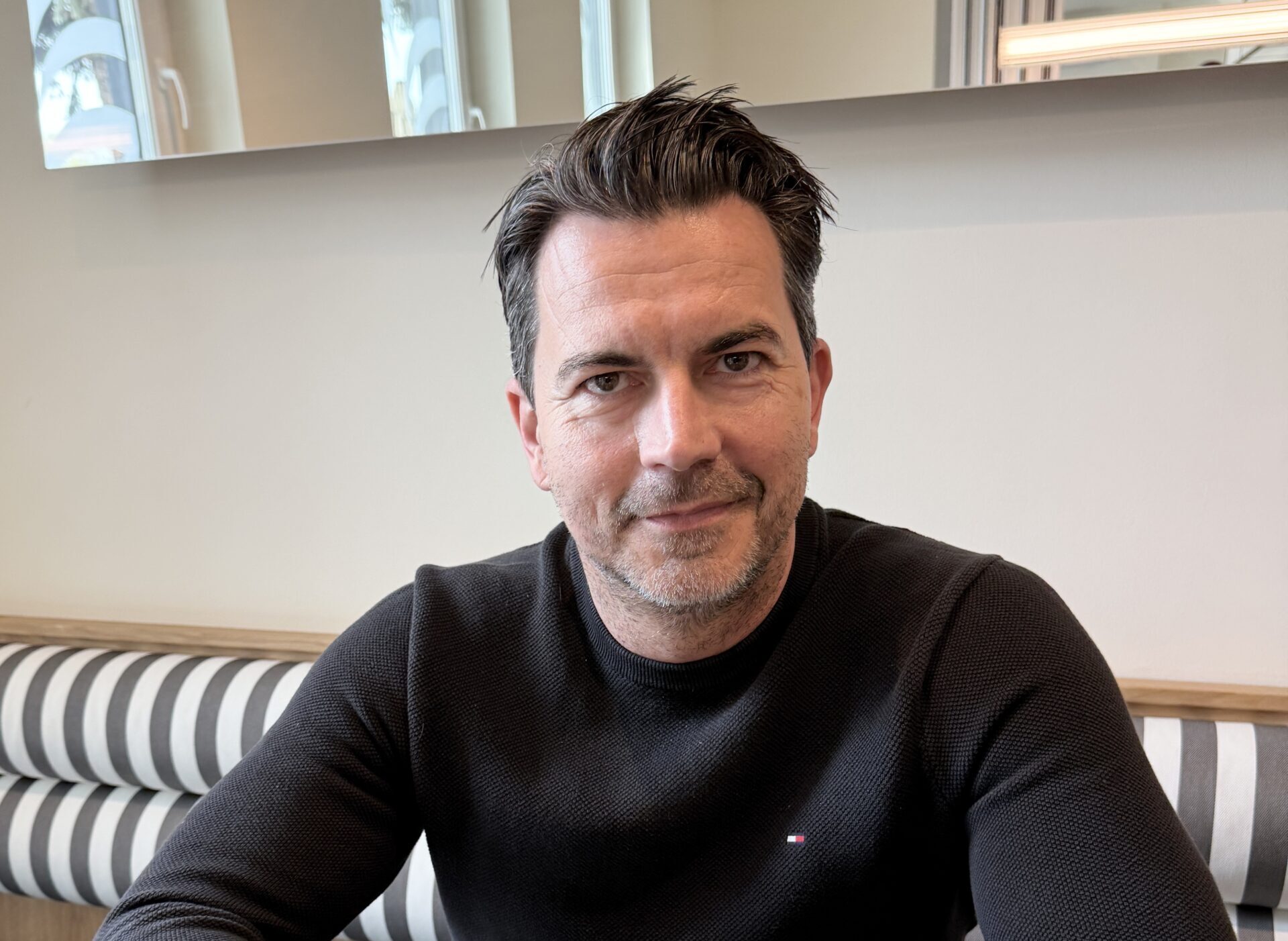
László Kósa is part of the highly skilled generation of Hungarian stunt professionals who have helped turn the country—especially Budapest—into a major hub for international film production. Building his career from the ground up as a stunt performer, Kósa developed his craft through years of on-set experience, mastering the physical and technical demands of action filmmaking before moving into coordination roles. Working within Hungary’s tightly knit but globally connected stunt community, he has contributed as a stunt performer to a wide range of international productions such as Game of Thrones, Hercules, Munich, The Borgias, Blade Runner 2049 and many more. As international shoots continue to flow into Hungary, Kósa’s role exemplifies the importance of local expertise in delivering Hollywood-level action, positioning him among the reliable, working coordinators shaping the region’s reputation for high-quality stunt work. As an HOD stunt coordinator his most recent projects include Billion dollar spy with Russel Crowe, The entertainment system is down with Keanu Reeves, Eric with Benedict Cumberbatch, Lee with Kate Winslet and Post Mortem, Hungary’s Oscar entry in 2022.
Budapest Reporter sat down with Kósa at the recently opened cafe on the renovated NFI Studios grounds where he is currently shooting his latest project.
Budapest Reporter: How did you get into the stunt world?
László Kósa: It’s a long story. I was born and raised in Kaposvár in Southern Hungary, back in the day at the end of the 80s we watched action movies on VHS tapes—whatever we could get our hands on, since there wasn’t really commercial TV or much access to western films in Hungary at that time. We watched Jackie Chan, Bruce Lee, and others nonstop. At the end of Jackie Chan movies, there were those blooper reels showing how stunts were made—that’s when we first realized stunt teams existed. That became a childhood dream. That’s how it started.
Were you into sports?
LK: Yes, always. Mostly combat sports—various kinds. I also did mountain climbing and rock climbing. Later, when I moved to Budapest and started getting into stunt work, I added horse riding and acrobatics.
Was there formal training back then?
LK: Not really. We basically trained ourselves—there weren’t official schools like today. After finishing college (I studied economics), I moved to Budapest around 2000–2001 and tried to look for any stunt training and found the Hungarian Stunt Association. Reaching them was difficult—no internet, just phone books. Eventually I found training sessions at the Honvéd sports hall on Dózsa György Road in the city. I contacted them, went down, and started training—just like joining any sports club and slowly working your way in.
So it’s fair to say it was quite hard to work in stunts back in the day
LK: Exactly. It was very hard to even find the opportunity, and even harder to get in. It’s not like today. Back then, the Hungarian film industry was small—mostly local films and commercials so we did things like medieval tournaments and theatre work. If you perform live, that’s completely different from film, because there’s no ‘let’s do another take’ or stopping.
These were great schools in a way— you learnt to be on time, you understood timing and everything else. So we really went through all of that.
When did international work pick up?
LK: Around 2003–2004, when Andy Vajna, Producer returned from the US and started bringing in big international productions. One of the first was I Spy with Eddie Murphy—I worked on that. Then came films like Munich by Steven Spielberg or Eragon.
Did you have a mentor you looked up to?
LK: Yes—my stunt mentor was Domonkos Párdányi (Döme). I eventually worked with him professionally, and that’s where I really learned the craft. I became an assistant coordinator under him and basically “graduated” through working with him.
How long can someone do stunt work?
LK: If you take care of yourself, you can do it for a long time—but there are limits.
An older person won’t have the same physical ability as someone younger. That’s just reality, like in sports. A professional stunt performer keeps training constantly.
You need a wide skill set: fighting, rigging, driving, riding, etc. There are no “superhumans”—you have to keep improving.
After about 10–15 years, many people transition into another role. For me, becoming a coordinator was a great next step.
How big is the stunt community in Hungary?
LK: Hard to say exactly, but maybe around 100 people who can work on international productions.
Different projects require different specialists—horse riders, fighters, drivers—these skills take years to develop.
Do you have a favorite type of project?
LK: Yes—modern action. Fights, car chases, military-style work.
Horse work is actually the hardest because you’re dealing with another living being—it can have a good or bad day.
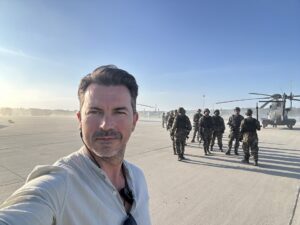
Credit: László Kósa
Looking through your IMDb you have some iconic projects you worked on as a stunt performer. How did you get into big productions like Game of Thrones or Avengers: Age of Ultron?
LK: It’s all about connections and proving yourself. For Game of Thrones, we got in through Domonkos Párdányi (Döme), my mentor I mentioned who was getting most international projects besides the famous Hungarian stunt coordinator, Gábor Piroch. Paul Jennings, action director of the Batman movies knew Döme well and trusted him. At the time no one knew that Game of Thrones (GoT) would be this big success so most of the English stunts went to work on other projects. We ended up working across multiple seasons and locations like Belfast, Malta and later in Croatia. The producers stayed loyal to us and you can see several Hungarian stunts in all seasons of GoT.
For Avengers, we worked with another English stunt coordinator, Gary Powell, on Hercules that shot in Hungary with Dwayne Johnson, so he later invited us back to join in on Avengers. One job leads to another if you perform well.
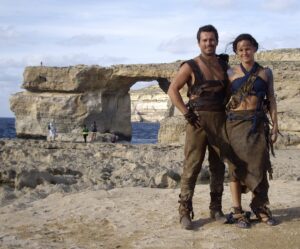
Credit: László Kósa
Is there a difference between local and international productions?
LK: Surprisingly, it’s not that big in terms of filmmaking language—it’s very international.
The biggest difference is often the working conditions. For example, on Game of Thrones, conditions were quite basic compared to Hungary. But overall, it depends more on the people—producers, directors, and team atmosphere.
What qualities are the most essential in this profession in your opinion? What do you look out for when picking team members?
LK: The most important is a “never give up” mentality. Hungarians are known for being resourceful and adaptable—we had to be good at everything, not just one specialty.
So discipline, persistence and work ethic matter more than talent. A disciplined, persistent person will outperform a naturally talented one who gives up.
Beyond physical ability, the most important thing is mentality. They need to be reliable, professional, responsive, and team-oriented. This is a team environment—if you’re not actively in a scene, you should still help others, bring water, and support the team.
I also value motivation and enthusiasm. I prefer people who genuinely love what they do and don’t need to be pushed. And persistence as mentioned is key. Not getting selected for a role doesn’t mean you’re not good enough—it’s often about fit. You have to stay patient and keep working.
Could you break it down for me what a stunt coordinator actually does?
LK: You get a script, analyze it, and propose how to execute the action scenes. You plan everything:
choreography, number of people and training time needed, safety measures and of course the budget. You’re responsible for everything really —from safety to finances. As a stunt coordinator you become a part psychologist, a part manager, a part accountant and HR person. It’s a complex job.
Where do you get inspiration for action scenes?
LK: From everywhere—movies, different cultures, styles. But you always have to adapt to reality.
Producers might show references from big films like the James Bond film series or John Wick, but those scenes might have months of preparation and huge budgets. We might only have a few days and a handful of resources—so creativity and adaptability are key.
Can you tell me about your team? What does a typical stunt team look like on a larger production? Who do you rely on most?
LK: One of the most important people for me is what we call a department coordinator. I don’t like calling them a “secretary,” because that doesn’t reflect the scope of the role at all. They handle a huge range of responsibilities—coordinating stunt performers, managing availability, handling administration, and essentially keeping everything together.
I have two key people in this role: my wife, Kinga Gavalda who is also a famous stunt performer, and Lilla Wollein. Both of them have been working with me for years, and they’re fantastic. They’re essential not just from a professional standpoint, but for each entire project as a whole.
In terms of hierarchy, on bigger productions you definitely need an assistant stunt coordinator, whose role is also among the most important positions, especially because multiple units may be shooting at the same time—main unit, second unit. I can’t be in two places at once, so this person effectively does the same job as me, but I make the final decisions. It’s crucial that I fully trust them. In recent years, my greatest support in this position has been József Kovalik Jr, but as my team continues to expand, I’m assigning similar responsibilities to more and more team members.
Then you have fight coordinators, especially on films with a lot of combat. They’re like choreographers, but also trainers—they work closely with actors, prepare them, and rehearse with them. I can’t do everything myself because I’m constantly in meetings and coordinating across departments, so you have to trust your team with responsibilities.
Another major segment is rigging—rope work and systems for flying, explosions, or any kind of aerial movement. The key rigger leads that team and works closely with me. They know exactly how to execute things technically—how long it takes, how many rehearsals are needed, and so on. But ultimately, the final decision is always mine.
How do you stay up to date with the technical side of things for stunts?
LK: It’s a continuous process because the technology is constantly evolving. It’s not just about ropes anymore—it’s about complex rigging systems that can move people in studios or outdoors. We use winches, lifting systems, pull machines—hydraulic or air-pressure-driven equipment. These tools are becoming more advanced all the time, so you have to keep learning.
How do you prepare for complex scenes like car stunts, fights, or large rigging setups?
LK: Experience is key—you have to know how to approach each type of scene. But the other crucial element is practice. Constant practice. Producers often question why we need so many rehearsal days, especially from a budget perspective. I usually respond with an analogy: why does Real Madrid train twice a day? They already know how to play football. It’s the same here—if you don’t practice continuously, it simply doesn’t work.
Everything is planned step by step. Everyone must know exactly what comes next. We start calmly, without rushing. There should never be a situation where someone doesn’t know what’s happening around them—that’s how accidents happen.
For example, in a big fight scene, stunt performers and doubles first design and rehearse the action. Then we create previsualization videos—essentially fully edited sequences with sound effects and music—to present to the director. Once approved, we move on to rehearsing with the actors.
What’s the biggest challenge in your job?
LK: In this profession, everything is possible—it just depends on time and money. Sometimes you have both, sometimes neither, sometimes only one. The biggest challenge is managing that balance while ensuring the creative vision is realized and no one gets hurt. My primary responsibility is control. If I feel we’ve reached a point where someone might not go home safely, I stop the process. That’s not always easy, especially with producers pushing to finish things, but there has to be a line.
Do you ever say no to a stunt?
LK: Yes—usually because of time constraints. If the day is running late and people start rushing, I’ll say we continue the next day. Weather is another factor. If you’re shooting outdoors and conditions suddenly change, it can make things unsafe. But these situations are rare because we plan carefully.
Looking back, which projects are you most proud of?
LK: Winning an Emmy for Game of Thrones—specifically the “Battle of the Bastards” episode—was a huge moment. Everyone involved received the award, and I think the team truly deserved it.
Another memorable experience was working on Hercules. There was a large fire stunt involving flamethrowers. Initially, the international crew assumed they would handle it, but after testing, they decided the Hungarian team should do it—and I was one of the performers. That kind of recognition within the industry means a lot.
I also loved working in Malta on Game of Thrones. On the other hand, Belfast wasn’t my favorite—cold, rainy, mostly night shoots.
What about your work as a stunt coordinator?
LK: Recently, I worked on the second season of 3 Body Problem, a Netflix sci-fi show, where I was the head stunt coordinator in Hungary without anyone above me. That’s probably the peak of my career so far. We had around 25–30 riggers on some days, plus even more stunt performers. In total, over 110 stunt professionals worked on the project. It was massive—technically complex, demanding, but incredibly rewarding. The whole team did an outstanding job.
How do different international productions compare?
LK: American and British productions are becoming more regulated—there’s a lot of health and safety, policies, and restrictions. In the end, a lot gets replaced by VFX.
Indian productions are completely different. They move fast, want to do everything practically, and if they trust you, they give you full creative freedom. You might do in 20 days what would take three months on a big Western production. It’s exhausting, but professionally very satisfying.
What do you think about the increasing use of CGI and VFX in action movies?
LK: Honestly, I think it’s often overused. Even with huge budgets, some modern films don’t look great. Older films had a stronger visual impact. Many things—fire, water, explosions—can still be done practically, and often better. But for various reasons, productions rely heavily on VFX, sometimes at the expense of quality.
Why is Hungary such a strong location for film production in your opinion?
LK: Cost plays a role—Hungary is still cheaper than places like London—but that’s not the main reason. The real strength is the quality of the workforce. Across all departments—camera, stunts, production services—the level is very high. That’s why productions keep coming here, even when cheaper options exist elsewhere.
Are there other international mentors or figures who influenced you?
LK: Yes, people like Paul Jennings had a big influence on me. He’s the kind of professional I admire—calm, composed, never shouting. I believe if you lose control of yourself, you can’t control anything else. Staying calm is essential in this line of work.
What motivates you to keep going? Do you have a “dream project”?
LK: Half-jokingly, I say I won’t stop until we shoot a film in Hawaii—fighting on a beach or in a bar by the ocean. Taking my team to a completely different environment would be amazing.
I also love action comedies—they create a lighter atmosphere on set. I enjoy working in a positive, fun environment rather than a tense one.
At the same time, I’ve reached a point where I won’t tolerate certain conditions anymore. If a project is too chaotic or unprofessional, I would walk away. That’s something that comes with experience.
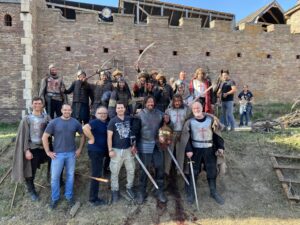
Credit: László Kósa
How do you balance work and personal life?
LK: The film industry is unpredictable—schedules change constantly, days get canceled or extended. It’s hard to tolerate this lifestyle for someone outside the industry. Since my wife is also in stunts it is easier for us to manage. I chose to work more in Hungary so I could be with my family. It’s important for me to be present—to see my kids grow up so it’s nice that depending on the project, I am home in the evenings or the weekends.
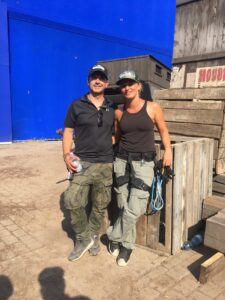
Credit: László Kósa
Any final thoughts you would like to share?
LK: People often ask about big names I’ve worked with, but for me, it’s more about the team and the work itself. At the end of the day, I just focus on doing my job well. Some people will like it, some won’t—but that’s part of the process.