CHINA Edition
 Hungarian Edition


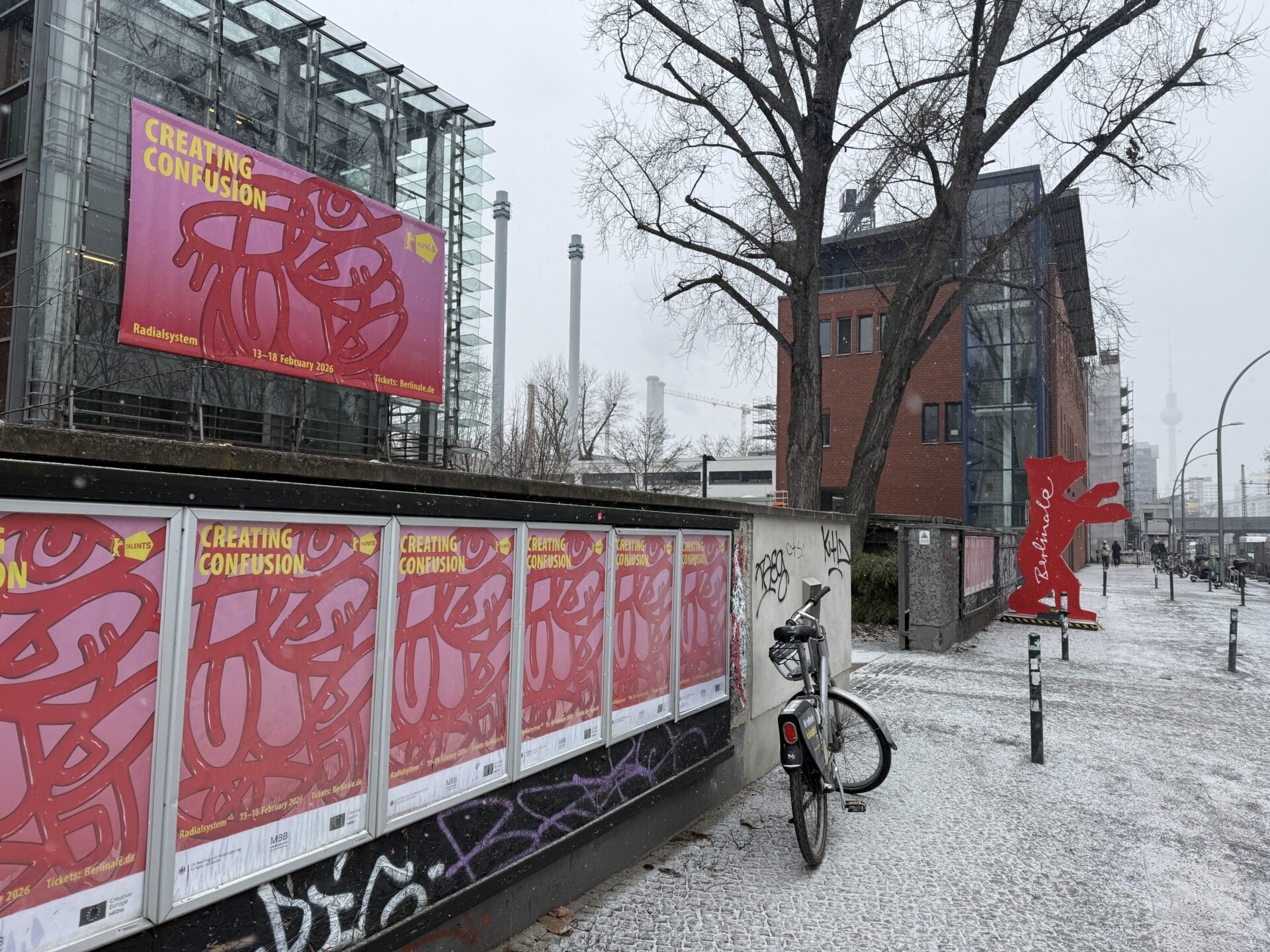
This year’s Berlinale Talents once again proved why it’s considered one of the most important international platforms for emerging filmmakers, bringing together around 200 creatives from more than 70 countries for masterclasses, workshops, and interactive networking — all closely connected to the wider Berlinale industry scene. In a particularly strong showing for Hungary, three Hungarian talents: Dorka Vermes, Director, Virág Tyekvicska, production designer and Ajándok Gyenis, film distributor at Mozinet were selected for the programme.
Considering that Berlinale Talents receives thousands of applications every year, being selected is no small feat. Their participation highlights not only their individual work in directing, design and distribution, but also shows that a new generation of Hungarian film professionals is increasingly visible on the international festival and co-production scene. Sophy Romvari, Director of Blue Heron from Canada of Hungarian descent was also selected to take part.
Budapest Reporter attended the event to catch up with the Hungarian participants, talk about what this opportunity could mean for their careers, the projects they’re currently working on, and what it’s like to navigate the film industry as young professionals today, along with their outlook for the near future.
Dorka Vermes, Film Director
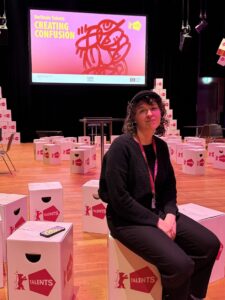
Photo credit: Andi Lustak
Dorka Vermes is a Hungarian film director whose work has gained international recognition for its emotional depth and distinct artistic voice. Her first feature film Árni premiered at the 80th Venice International Film Festival in 2023 in the Biennale College Cinema section — a prestigious opportunity secured through the festival’s competitive development program, which selects only four projects from hundreds of submissions. Árni also competed for the Queer Lion Award at Venice, underscoring its impact within contemporary queer cinema. Following its Venice debut, Árni was invited to several significant international festivals, including the Hong Kong International Film Festival, Raindance Film Festival in London, and Film Festival Cottbus in Germany, winning several awards worldwide. In 2025, Dorka was recognised with the Best Director award from both the Hungarian Film Critics’ Association and the 44th Hungarian Film Week, highlighting her emergence as one of Hungary’s most promising young filmmakers.
Budapest Reporter: Congratulations on being selected for Berlinale Talents. What does participating in the program mean to you at this stage of your career?
Dorka Vermes: It’s a great honour to be selected. There are thousands of applications every year, and many people apply five or seven times before being accepted, so I feel incredibly lucky to be here. I also think that where I am now is the most ideal phase in a director’s career to take part in such a program — right after the first feature and while preparing the second.
Was there a central topic or theme that shaped the week?
DV: Yes — “confusion.” That was pushed very strongly. The idea was that confusion can be a productive state, that beautiful and meaningful things can emerge from it. Most of the small sessions tried to frame confusion as a creative condition rather than something negative.
Did the program help you think about transitioning from your first feature to your next?
DV: Not in a direct, structured way. But I heard that as an alumna you can apply for certain Berlinale Talents pitches or initiatives that are only open to former participants, which might help with financing and networking.
For me, the most valuable part of the program was getting to know the other talents — or at least the ones I had the chance to meet — because I was actually quite surprised by how little it was facilitated for us to get to know each other from the different departments — directors, actors, cinematographers — to connect with one another in a more in-depth way.
Looking back at Árni, how do you see the film in relation to where you are artistically today?
DV: Since Árni, a lot has happened. I spent a month in Los Angeles as part of the Golden Globe Residency Program. About a year ago, we started developing a new film, Places Half Empty which won the Eurimage Co-production Development Award in last year’s Sarajevo Film Festival so now we are working on further securing the financing of this film.
What were the biggest lessons you took away from that process of making Árni?
DV: Árni was made under extremely difficult conditions, with an ultra-low budget and brutal time pressure — eight months from funding to delivery because of the Venice Festival program requirements. There was no time to traditionally develop or reflect on phases. It was exhausting and, honestly, deeply self-exploiting. I’m very grateful for the opportunity and for the support from the great mentors I met there, but I wouldn’t want to make another film under such conditions.
The most important lesson I learned from this process is that I have to trust myself. If I don’t feel that we’re making the same film and working toward the same goal — and a collaborator is not supporting the process but rather making it harder or even obstructing it, then it’s crucial not to wait. If the situation isn’t going to change, you have to take the necessary steps and protect the film. Even if it ultimately means letting those people go so the project itself isn’t put at risk.
Your executive producer and mentor, Béla Tarr tragically passed away at the beginning of the year. What did his mentorship mean to you? How did he shape your visual aesthetics?
DV: Of course, it’s the personal aspects that affect me the most. We’ve been in almost daily contact over the past five years, and I don’t think that absence can ever really be filled. That’s the part that hits me hardest, and I haven’t fully processed it yet, since it’s still so fresh. On a practical level, he was also one of the producers on this film, the one we’re currently making, so there are still aspects of his role we have to address. But it really hurts that I can no longer discuss the questions I would like with him or seek his advice on matters.
In terms of influence, I wouldn’t say he shaped my visual language directly. We didn’t discuss aesthetics in a technical way. It was more philosophical. We saw the world similarly — that’s why we chose to work together. His mentoring credo was: “No education, only liberation.” He tried to protect filmmakers, to encourage them, to show them what they already had within themselves and to believe that it was valuable. To resist commercial expectations and dare to be yourself. That’s what I carry with me.
What drew you to Places Half Empty?
DV: It’s rooted in personal experience. And honestly, I chose it partly also because I thought it would be the most realistic film to finance. It’s a relationship drama between two women, so I assumed it could be made with a smaller budget.
Since Sarajevo, we’ve met new producers and are building an international co-production. We’re looking for a Western-European majority producer and continuing development. We’re also waiting on some funding decisions and hoping to move forward with casting soon.
How will it differ from Árni?
DV: In some ways, it will be similar — it’s still my sensibility. But the context is different. Árni is more atmospheric, set largely in a rural or foreign environment. Places Half Empty is an urban relationship drama set mainly in Budapest, with a smaller part in Germany.
The film explores how external social pressures — housing crises, precarious work, the political climate, societal expectations — become deeply internalized. It also examines the contradictions of love: how something built on lies can still be true, and vice versa. I think that tension is beautiful and very cinematic.
How difficult is it to build a sustainable film career from Hungary today?
DV: The biggest difficulty is the lack of state support for filmmakers who are not making system-friendly films. If you don’t align with the government’s ideology, you don’t receive funding. For official co-productions, you must bring at least 30% from your own country — and that’s extremely hard under these conditions.
Some Hungarian films have been made without state support, but my films aren’t commercial projects. European partners often don’t take very small budgets seriously. In many places, a “micro-budget” means € 1-2 million. If you propose €600,000 or €700,000, people almost laugh.
So we look abroad — private financing, foreign funds. The Sarajevo program was important because it connected us to funds where you can raise smaller amounts without being forced to spend everything in one region.
Virág Tyekvicska, production designer
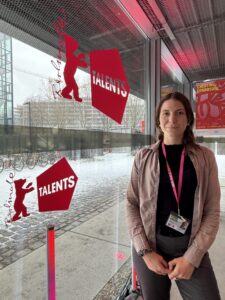
Photo credit: Andi Lustak
Virág Tyekvicska is a Hungarian production designer and art director steadily building an impressive career across international and local Hungarian screen projects shooting in the country. She has contributed to high‑profile international feature films such as The Brutalist (2024) — where she worked as an art director on the BAFTA‑winning period drama — as well as serving in art director roles on Desperate Journey (2025) and the acclaimed Netflix series Russian Doll (2019). In addition to her work on larger international productions, Tyekvicska has designed and art‑directed for award‑shortlisted and festival circuits projects including the short films Diamond Beauty (2024) and Take Me Away (2023), showcasing her versatility across both narrative and stylised cinematic worlds.
Budapest Reporter: What made you apply to Berlinale Talents, and how has the experience been so far?
Virág Tyekvicska: I’ve always been looking for a community. In Hungary, production designers and art directors don’t really have one. You never work on the same projects with other designers, so it’s hard to meet people who do the same thing.
I arrived in Berlin without expectations really. What surprised me was how easy it is to talk to all these people from around the world, and how similar we are. I had the best conversations — not only about professional life. It’s rare to go somewhere where people do the same things as you and are very similar to you — and they’re from Afghanistan or Japan. That’s amazing.
I learned that there are communities of art directors and production designers in other countries. Sharing knowledge and being connected would be really valuable. We also met agents and learned how representation works. I don’t know about agents representing production designers in Hungary, so I’m very curious whether they represent Eastern or Central European creatives.
Looking back at your journey so far, what experiences have shaped the way you build worlds for film?
VT: At first, I wasn’t even in the art department — I just wanted to somehow work in film or in production. While still at university, I studied media design at MOME (Moholy-Nagy University of Art and Design Budapest), I had an internship with Kinopravda, a Hungarian commercial directors’ collective working internationally which was my first look into film. I was a producer’s assistant, so I saw all the departments. I think it was around 2017 or 2018.
I already knew I wanted to do something more creative. When I saw what a production designer actually does, I started to investigate that — meeting people, talking to them, trying to assist them. It worked out sometimes, not always. I didn’t really have a single mentor, which I really longed for at the time, but looking back it was also really good to work with different people.
Which projects have been most formative for you?
VT: One of the most creative projects where I really felt I could be a designer was the short film Diamond Beauty. The producer put us together with the director, and I felt that project really fit me. I loved working on it.
When I work as an art director or supervising art director on service productions, that gives you knowledge of how a big system works. It trains you for all kinds of situations — from dealing with people to designing very complicated stunt actions. I think all of that is necessary to grow.
Also working on The Brutalist was a great experience, we didn’t know it was going to be such a success, but reading the script, I really felt this was something different. The people making it really believed in it, and that made it special. We felt very involved and very passionate about it.
At what stage does your contribution become crucial?
On my first feature film, I got involved at the very beginning. The director already had a script, not the final version, but we started at the same time as the cinematographer. The three of us had time to sit down and explore the script in detail. We built such a strong base and such trust that later we didn’t have to ask many questions. We really saw the same movie from the beginning.
I don’t only do mood boards. I write a lot about the script — like a mind map — and later match it with images.
At Berlinale Talents, I attended a workshop that suggested that production designers, the DOP, the director, the screenwriter — maybe even the sound designer — should sit together even before the script is written. First you build and explore the world, and then the story is born within that world. Not the other way around. Sometimes people write a story and then try to fit it into locations, and it just doesn’t work.
What are the biggest challenges production designers face today?
The amount of prep time. Many times we don’t have enough time to understand each other. And that actually costs more money later. If we could just sit down a bit longer and give it time, it would solve many things in advance.
What is next for you after Berlinale?
Right now I’m in the middle of a service production — an American action film — which is exciting. I’m supervising art director.
After that I’m shifting into an independent Hungarian movie with László Csuja. I really like the script and can’t wait to build that world. It includes two very different worlds at the same time. I really like that.
I really hope that Hungarian films will be part of my future. And I’m trying to manifest worlds and topics that I’m really interested in. I’d love to work on a movie that explores transgenerational trauma across different historical periods within one film. I’m also especially drawn to the 1990s, early 2000s and would enjoy setting a story in that era.
Ajándok Gyenis, theatrical distributor at Mozinet and founder of Cinego
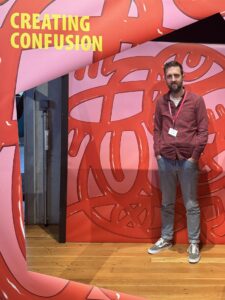
Photo credit: Andi Lustak
Ajándok Gyenis is an important voice of Hungary’s film distribution scene, known for his work at Mozinet and as the founder and CEO of Cinego, an arthouse streaming platform dedicated to bringing quality independent and international cinema to wider audiences. Gyenis has been part of the Mozinet team since 2014, where he has played a key role in managing both theatrical and VOD distribution for notable award winning Hungarian releases such as Son of Saul (Saul Fia) and On Body and Soul (Testről és lélekről), contributing to their visibility in the Hungarian market. His selection for Berlinale Talents 2026 highlights his influence not just as a distributor, but as a cultural advocate who bridges the gaps between independent filmmakers and audiences — both in Hungary and internationally.
Budapest Reporter: First of all, congratulations on being selected. Tell me about the application process. I heard around 3,500 people applied — that’s a big deal.
Ajándok Gyenis: We had to apply back in August — There were detailed questions, you had to make videos about your projects or your profession, and of course submit your CV. After that I totally forgot about it for months. Then in December I was thinking, ‘Okay, maybe I got a reply, maybe I didn’t,’ and then the email came.”
The programme brings together people from all corners of the industry. How has the experience been for you?
A.GY: The Talent programme tries to pick people from all over — producers, directors, actors, editors, people actually making movies. There are a few people like me from post-production, international sales or distribution.
There have been some talks with huge talents. For example, there was a conversation with Hiam Abbass, the Palestinian actress. She was pretty great. She talked about her experience making movies in the Arab world and in international productions. We also had smaller workshops focusing on the themes we face. I just had a workshop on distribution — mainly for directors and producers — about how to sell, how to reach sales agents and how to get distributed in theatres. From our side, it was interesting to hear what they struggle with when trying to push their films to international sales agents.
How do you see the current state of film production and distribution in Europe?
A.GY: If you ask anyone in this field, they would say the past years were not that great. It’s kind of a struggle right now. There’s a lot of competition — a lot of films that want to be distributed, but they’re too small or there’s no audience for them. Moviegoers didn’t go back to theatres as was expected after Covid. There is definitely some tension.
For smaller art-house films, the shift has been particularly visible. In recent years we had some successes with smaller art-house films reaching wider audiences than expected. We distributed an Estonian documentary about women talking about their lives in a sauna — Smoke Sauna Sisterhood. It seems small, but it did really, really well in Hungary. But last year it was really a struggle for these kinds of smaller films to reach audiences.
Is that a Hungarian problem?
A.GY: I don’t think it’s a Hungarian problem. It’s an issue everywhere. Of course in Hungary inflation and economic struggles affect audiences. Culture is often the first thing that gets cut from a family budget. But maybe people also want to escape reality. If they already feel the weight of daily life, they might not want to watch others struggle so they may choose an uplifting film.
How do you put together your annual slate?
A.GY: We release around 20 films per year — maybe three or four Hungarian titles, including state-funded films and independent ones. We always go to markets like EFM and Marché du Film to pick up films. But 20 films fill up quickly, so there’s not much room to add new ones.
Hungary’s streaming market is saturated. Where does your platform sit in that landscape?
A.GY: It’s competitive because there are huge international companies. But we try to reach a niche audience they don’t have — art-house cinema-goers. We target people who go to art cinemas. In the past two years it’s been going great. Of course it could always be better.
How do you navigate partnerships in this ecosystem?
A.GY: One great thing about being a domestic distributor is that you can befriend similar companies in other countries where you don’t compete but can work together on the same films. We have great partners in Poland, Czechia, Romania — similar cultures. We often distribute the same films and can share knowledge about what worked and what didn’t. Many times we acquire films together.
Do you see unconventional distribution models emerging? What’s your opinion about shrinking theatrical windows?
A.GY: I understand why Netflix wants shorter windows — they make money on VOD. For them there’s no real point in theatrical releases beyond awards eligibility. But for art-house films, I don’t want that. The audience is so niche that they need time to find the film in cinemas. If a film flops after a week, there’s no real holdback for VOD. But if it has great numbers in theatres, there’s no point putting it online early. We use a different model. There’s no point rushing.
What’s your outlook for 2026?
A.GY: We’re planning to apply again for a European MEDIA fund. The VOD platform started almost six years ago and we need to upgrade the system — new landing page, facelift. On the theatrical side, every film requires a new strategy. There’s no canned distribution plan we can use for all films. We always have to come up with new ideas to reach audiences. That’s challenging but exciting.
In terms of the market, maybe with recent political shifts in the U.S. there will be a bigger audience for European films in Hungary and in Europe but Hollywood films are still the most profitable in theatres.
Everything depends on quality and timing: we’ve seen years with really great films and years where nothing really happened. You always have to calculate those things.