CHINA Edition
 Hungarian Edition


With production budgets soaring past $190 million for Dune: Part Three and marketing pushing the total costs upwards, the upcoming Dune: Messiah represents one of the most valuable and carefully guarded investments in modern cinema. The financial stakes are immense, and the industry depends on secrecy and controlled rollouts to ensure that films of this scale succeed. Yet all it takes is a single reckless act—an unauthorized breach of a closed set—to jeopardize the audience experience they are meant to protect.
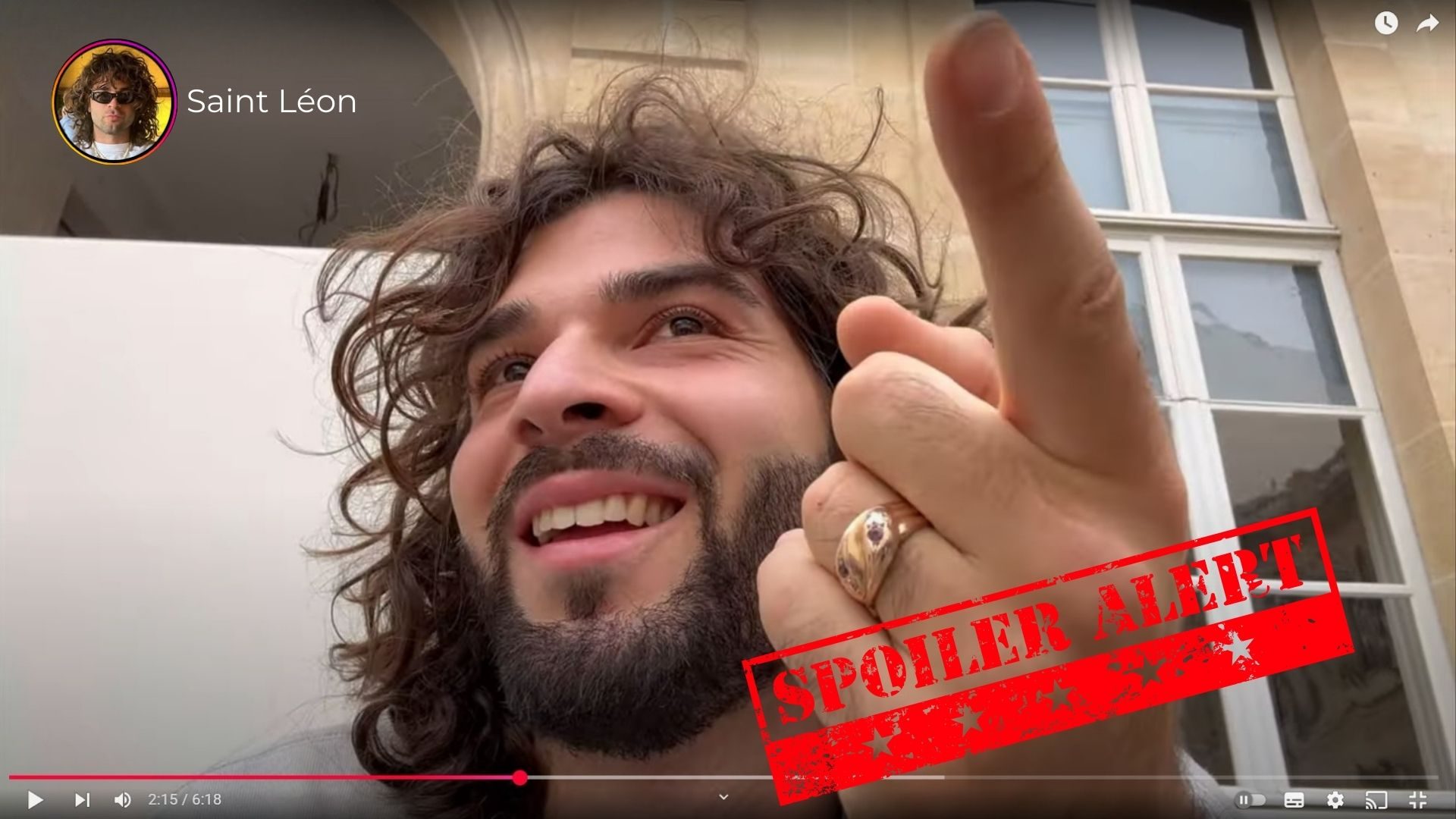
In today’s social media landscape, visibility is treated like currency, but not all visibility is earned. While some creators build their presence through collaboration and legitimate access, others exploit the system, cutting corners by invading spaces meant to remain closed. Nowhere is this more dangerously exemplified than in the case of Paris-based influencer Saint Léon, who has made trespassing into high-profile events the cornerstone of his persona. One of his latest stunts, sneaking onto the closed set of Dune: Messiah and boasting about it in an Instagram reel, makes clear how far this behavior has escalated—and why the film industry should be alarmed.
The line crossed here is not simply one of etiquette but of law and ownership. A film set is protected intellectual property, governed by strict confidentiality and security agreements. When outsiders breach these protections, they put at risk years of development and hundreds of millions of dollars in investments. A single unauthorized image or clip can undermine marketing campaigns, jeopardize box office projections, and spoil the carefully crafted experience that studios work tirelessly to deliver. And there is indeed footage of Léon’s Dune: Messiah intrusion, posted on his personal Instagram. To avoid amplifying the violation further, we will not republish the material here. The fact that such proof exists is troubling enough. What Léon frames as entertainment is, in reality, a reckless violation with measurable financial consequences.
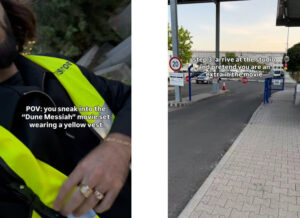
What makes this case even more serious is the manner in which he carried it out. According to his own footage, Léon first stole a visitor’s vest that was not his to take. He then used the stolen vest to mislead staff into helping him gain access to the closed set. Once inside, he filmed the intellectual property of a studio bound by strict NDAs signed by every worker on site. Finally, he monetized the very footage he had created illegally, profiting directly from theft and deception. These actions are not mere stunts—they edge into felony-level misconduct.
Beyond immediate leaks, the normalization of such behavior poses an even greater danger. If one influencer is rewarded with views and notoriety for breaking into a production, it encourages others to try the same. The result is an erosion of security protocols and an environment where productions must spend even more resources to shield themselves from intrusion. This not only inflates costs but risks driving studios further into isolation.
For filmmakers and producers, the threat is clear: figures like Saint Léon treat the enormous effort of cinema as nothing more than raw material for their vanity. They exploit the work of thousands of professionals—actors, crew, designers, marketers—reducing artistry to a backdrop for social media clout. In doing so, they destroy the joy of first discovery that cinema depends upon and risk the commercial wellbeing of entire projects. Such actions should not be trivialized as “mischief,” but recognized as deliberate violations that directly endanger the industry.
And in the end, by proudly publishing the evidence himself, Léon has ensured that the industry now knows his face, his methods, and the scale of his recklessness. He will, in essence, get exactly what he worked for: his own footage standing as evidence against him.