CHINA Edition
 Hungarian Edition


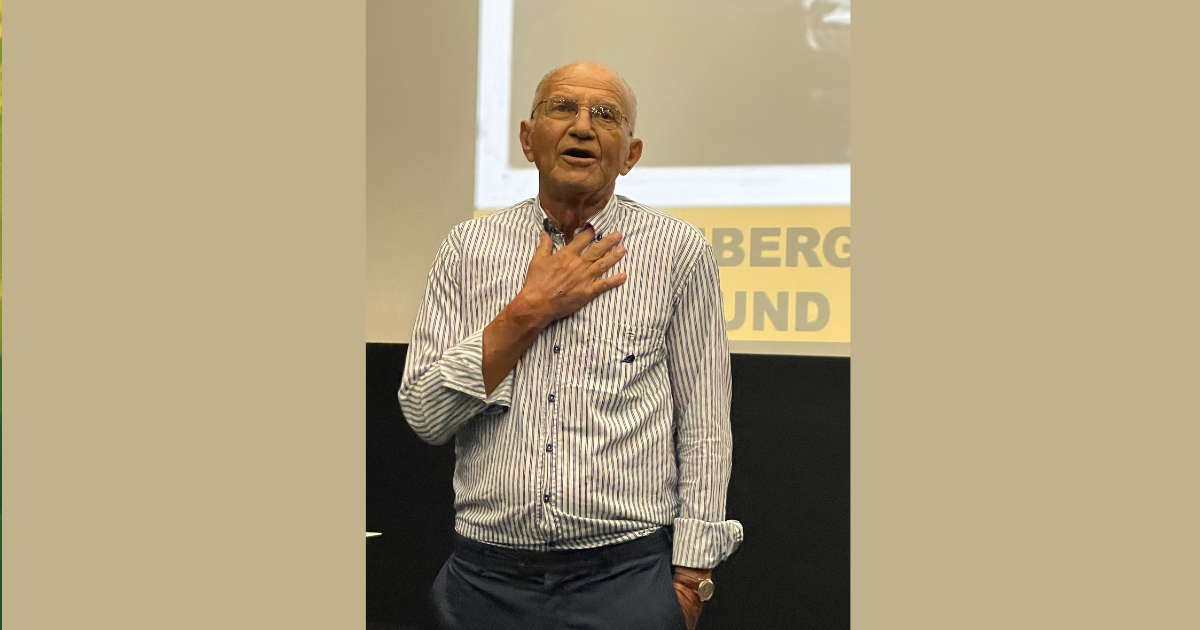
You can take the boy out of Hungary, but you can’t take Hungary out of the boy. Steven Kovacs, born in Budapest as Kovács István Győző, is a prime example of this. Having emigrated with his family at the age of ten, Steve grew up in the U.S. and sports a signature California tan but still speaks perfect Hungarian and is proud of his heritage 67 years after having left his homeland. Last week Origo Studios hosted a workshop where the master filmmaker spoke about Hungarians in Hollywood and shared about his role and experience in the creation of the New American Cinema of the 1960’s and 1970’s.
Being the largest and most versatile studio complex in Hungary, Origo Studios boosts the Hungarian film industry not only by offering state-of-the-art services and Hollywood-quality filmmaking but also by regularly hosting film industry giants giving lectures and workshops on various industry topics. Organized by the Origo Film Group, the Hungarian Hollywood Council and the U.S. Embassy Budapest, Steve was invited to give a lecture at the studio while he was in town for the 6th Budapest Classics Film Marathon 2023, an international week-long event celebrating the gems of cinema history.
Having studied history at Yale, Steve was always fond of the arts and cinema. After he received his Ph.D. in Fine Arts from Harvard, he began his career as a film historian, then taught film at Stanford University. In 1990, he was invited to chair the School of Cinema at San Francisco State University, where he has been professor ever since. He also guest lectured at the Hungarian Film Academy in Budapest. He is most known for his work as writer, director and producer of the feature films ’68 and Angel Blue, and for his Academy Award Nomination for his 1975 documentary, ”Arthur and Lillie”. Between 1977-1979, he worked as head of production for Roger Corman’s New World Pictures, where he was in charge of films, such as ”Deathsport”, ”The Lady in Red”, and ”Avalanche” among others. He wrote a book on French surrealist film and published countless articles and studies in the realms of film, arts and politics throughout the years. He also translated the poems of Hungarian poets Miklós Radnóti and Mihály Babits to English.
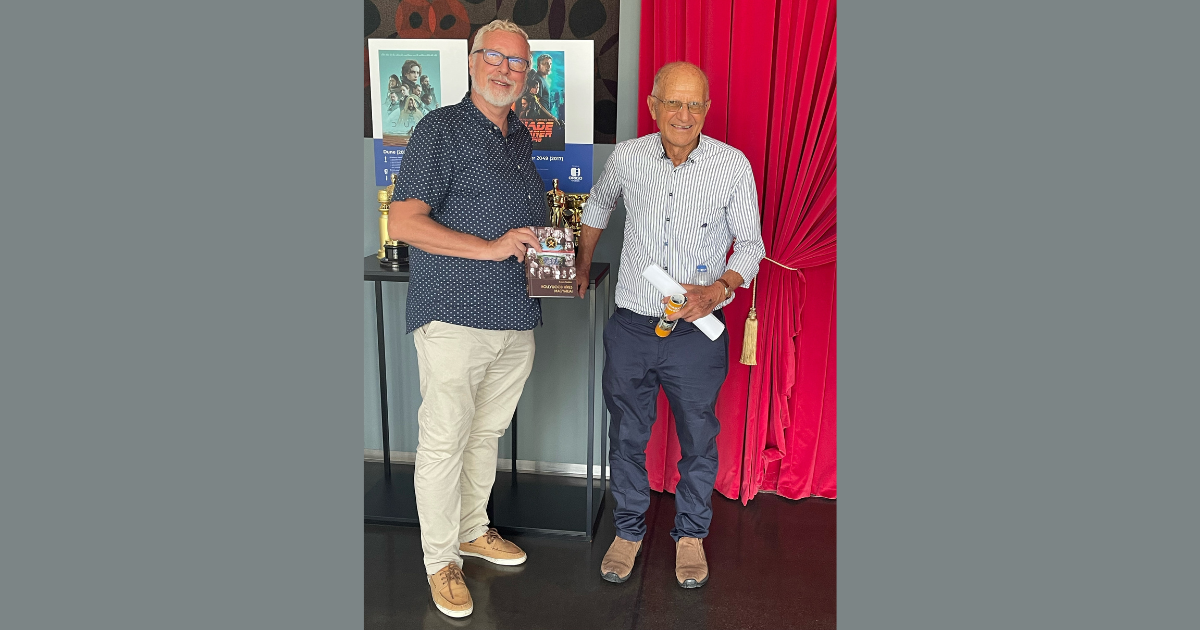
 Horváthné dr. Márta Fekszi, CEO of Origo Studios, opened the workshop by welcoming Mr. Kovacs and Balázs Bokor, President of the Hungarian Hollywood Council, moderated the event. Steve first spoke of the profound Hungarian influence in British cinema as it can be seen through the works of the Korda brothers and Emerik Pressburger (born Pressburger Imre József). His lecture continued by outlining the legacy of Hungarian-American filmmakers, where he mentioned that Balázs Bokor’s book, “Hollywood Famous Hungarians”, is a tremendously important handbook providing a summary of the prominent figures of the past that he has never seen before. Kovacs pointed out that most discussions on the topic of Hungarians in Hollywood center around the arrival of Hungarians in Hollywood and how they helped create it. He emphasized, however, that the crucial effect that Hungarians had on Hollywood began even before Hungarians arrived in town.
“The Merry Widow”, Franz (Ferenc) Lehár’s operetta, became a sensation in New York City in 1907 and immensely shaped Broadway’s future. Ferenc Molnár’s 1907 play, “The Devil” also became an international hit by 1908. As the The New Yorker wrote in 1946, “If you happened to visit New York in the winter of 1908, you could scarcely avoid seeing “The Devil,” a play by the Hungarian playwright Ferenc Molnar. Probably for the first time in the history of the New York theatre, four companies were simultaneously performing one play.” The same article in The New Yorker goes on by saying “In the thirty-seven years that have passed since these multitudinous productions of ‘The Devil’, seventeen other Molnar plays have been produced in New York, a record few American playwrights can claim.” Another Hungarian playwright, Melchior Lengyel (born Menyhért Lebovics), also found great fame worldwide, including on Broadway, with his 1909 play, “Typhoon.”
 Hungarians did not stop in the East, however, and the eyes of the writers, poets, artists and filmmakers of the Hungarian society in New York soon shifted further across the country, hence beginning the journey to the West. As Kovacs explained, there were two main waves of Hungarians taking this journey to the West (or immigrating from Europe and going straight to California), one between the two world wars and the other after 1956. He acknowledged the legacy of Adolph Zukor, William Fox, Joe Pasternak, Lajos Bíró, Charles Vidor, Miklós Rózsa, George Pál, László Benedek, André de Tóth and many others without whom Hollywood wouldn’t be what it is today.
Kovacs concluded by saying that Hungarians became very successful across many different industries and Hungarian scientists, photographers, musicians, architects were really able to take advantage of all the opportunities that existed back in the beginnings of Hollywood. He finished by saying that ”it is of profound importance for the youth to remember the greats of the past and for the young generation to get the appropriate education to learn what truly matters. You can’t make film without knowing how to do so.”