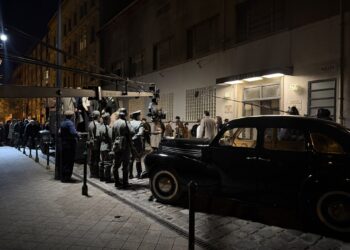
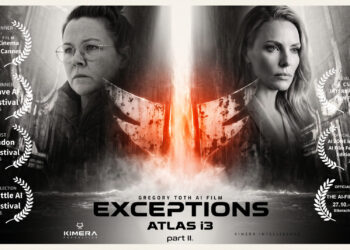
CHINA Edition
 Hungarian Edition


Mátyás Erdély is one of the most distinctive Hungarian cinematographers working in contemporary cinema today, known for his striking visual style, meticulous approach to lenses and lighting and his preference for shooting on film. A graduate of the University of Theatre and Film Arts in Budapest and The American Film Institute Conservatory, Erdély first gained wider recognition through his early collaborations with director Kornél Mundruczó on films such as Delta and Johanna which helped establish him as an emerging talent in Hungarian cinema. He achieved further international acclaim for his work on Son of Saul directed by László Nemes, whose immersive, tightly framed imagery played a crucial role in the film’s powerful impact and contributed to its win for Best Foreign Language Film at the 88th Academy Awards and the Spotlight Award from the American Society of Cinematographers for Erdély. He has since continued his collaboration with Nemes on Sunset and most recently Orphan, which premiered at the Venice Film Festival in 2025. Since the success of Son of Saul, Erdély has ventured out to work with international directors and has worked extensively with director Sean Durkin on films including The Nest and The Iron Claw.
Orphan is a Hungarian–British–French–German co-production produced by Pioneer Pictures, Good Chaos, Mid March Media, and AR Content, with co-production partners Lumen and Twenty Twenty Vision Filmproduktion. The film received support from the National Film Institute – Hungary (NFI), the British Film Institute (BFI), the French CNC, and the German FFA, among others.
On 8 March 2026, Erdély won the Spotlight Award from the American Society of Cinematographers for the second time for his work on Orphan. Budapest Reporter caught up with him for a video call from New York, where he is currently shooting a new film with Sean Durkin.
Congratulations on winning your 2nd Spotlight Award. What was your reaction when you heard the news?
It was actually a shock. After our premiere in Venice and then several big U.S. festivals, the film itself was not picked up by a U.S. distributor. We don’t have a U.S. distributor as of today, as far as I know.
To get nominated you usually need a lot of help—word of mouth is number one—but the film was kind of invisible after the initial festival run. So when I heard about the nomination, that was absolutely shocking, in a positive way.
Some of my colleagues—other members of the ASC—reached out saying they had seen the film and voted for it. I honestly didn’t even know how they had seen it because it wasn’t on many platforms. It was very difficult to find.
Maybe it’s partially because of my previous nomination and award. Maybe the ASC was paying more attention. I honestly don’t know. But it was such a great surprise to receive the nomination. And I personally know the other two cinematographers who were nominated, so it’s already a great thing to be among my peers.
Has this recognition changed the kinds of projects or collaborations offered to you?
Not yet, but the success of Son of Saul definitely changed my career for the better. That recognition was on such high levels that it became a film filmmakers know and use as a reference.
So me being the DP of Son of Saul was a big stepping stone.
But recognition also comes in strange ways. Hopefully this award means that I’m not just the DP of Son of Saul. I want to get out of that box, because I feel I was in that box for a while.
Since that film I’ve shot other films that were less successful but still recognized. These kinds of recognitions help people understand that you are a more versatile cinematographer—that you can do different things, different genres, different moods, and work with different directors.
Why do you think ASC members connected so strongly with Orphan?
First of all, it’s not a jury. It’s actually the whole membership of the ASC—around 400 cinematographers. Anyone who wants to vote can vote. So it’s similar to the Oscars.
I don’t know how many people actually voted. It could have been five people or many more—it doesn’t matter.
But to answer your question, I think there are many things unique about the film. The era we are portraying is very interesting and visually very specific.
Also what we created visually is a very unique mix. Without getting too technical, it involves shooting on film, the way we shot on film, and the lenses. We had custom-tuned lenses—an optician in Berlin actually “detuned” them for us.
We used a combination of many things to create the look. And of course this was combined with outstanding work from the production designer and the costume designer. All these elements together give the film a very unique look.
If you watch films, you don’t really see many that look like ours.
But the intention was not to say “look how different this film is.” This is simply where we arrived after months of testing, discussions, and exploring how the film should feel.
How did you develop the visual language of the film with director László Nemes?
Laszlo is extremely specific about the ideas that build the structure of the film—the visual structure and how we approach it.
But he relies on me more and more to translate those ideas into practical things: what equipment we use, what film stock we use, what the mood is, what the colors are, how the camera moves.
What’s amazing for me is that he always pushes me to go beyond—to leave my comfort zone and explore something we haven’t done before.
I watched the movie on 35mm at a screening at Urania theatre in Budapest and the experience as a viewer was so different. It had this intimacy and the way it plays with the tension was really tangible, it’s not just the grainy feel and the colours, it’s hard to put that into proper words. Were you consciously trying to create images that work on the viewer on a purely visual or emotional level?
That’s the whole point. That’s why it’s not literature, it’s filmmaking, because if you could describe this in words, then you wouldn’t have to be making it into a movie, right? So that’s the whole idea. find images that are not just illustrations to written words. You want images that can stand on their own just by looking at them, they have a very strong effect on the viewer.

Photo credit: Mozinet
What technical ideas were new for you on this film?
When you shoot on film it opens many possibilities—how you expose it, how you develop it. These are tools to create different looks.
I started exploring a special way to develop the film, which created a very contrasty image. But then I wanted lenses that would go against that effect—very low-contrast lenses—to even things out.
So the way we exposed the film and the way we developed it created a very contrasting look. The lenses softened that contrast. In the end these things balance each other but create something new.
The detuning of the lenses was definitely something we had never done before.
What lenses did you end up using?
We started with a very uninteresting set of lenses. But then with an optician at ARRI in Berlin we detuned them.
Basically all the technological advancements that make lenses perfect—we removed some of those qualities to make them imperfect. That imperfection is actually what makes them unique and beautiful.
But the lenses alone are only part of the equation. The film stock, the lighting, the exposure, the development—all of these things together create the final look.
Is there a scene that best represents the film’s visual approach?
Everything is difficult when making a movie. Nothing is simple—it’s extremely complex and very stressful.
But there are sequences I really love. One example is when Berend arrives and shines the light into the boy’s face. That sequence really shows what our approach yields.
I think that’s one of the best examples of what we were trying to achieve.
Does shooting on film affect how actors work?
It definitely requires more focus and concentration from both the crew and the cast.
When you start rolling film, it costs a lot of money—not just the film stock but also development and transfer. So you have to be careful about how much you shoot.
Because of that, we tend to be more precise when shooting on film.
There’s this beautiful wave, when you know you’re working and you’re constantly working, but you know when you’re shooting and you know when you’re not shooting. You can reset, you can adjust, and you can roll again. I do think it has an effect on actors and many actors prefer working that way.
Why do you think shooting on film is becoming popular again?
There is definitely a renaissance of shooting on film right now.
For many years film cameras were just sitting on shelves in rental houses collecting dust. Now you can’t even get certain cameras because they’re all booked.
I think filmmakers realize that we work with images, and the impact of those images is the most important thing.
If you put a digital image next to an image shot on film, I think most filmmakers would say the film image has a stronger effect on the audience. And that’s the whole goal of what we do—to create images that affect the audience.
For me personally, when I compare them side by side, the image shot on film has a stronger impact.
How much of the final look of Orphan was achieved in-camera versus color grading?
There’s no such thing as a percentage. You can’t just press a button and make something look like Orphan.
The final image is the result of all the little and big decisions we made along the way—the lenses, lighting, film stock, exposure, development.
Color grading is the final touch where you finalize the look. But the look was already built into the way the film was shot.
Looking back at your career so far, where does Orphan sit in terms of your creative evolution?
I think it’s my best work so far.
So this award must feel extra special?
It does, for multiple reasons. The American Society of Cinematographers is kind of the crème de la crème of cinematographers—its members are among the best in the field worldwide—so it’s a huge honor to be recognized by them.
What do you look for when choosing directors to work with?
I’m trying to find filmmakers with certain sensibilities. It’s actually difficult to define exactly what that means.
If you look at my work, I don’t collaborate with many different directors. For the last ten years I’ve mainly worked with two: Laszlo Nemes and Sean Durkin.
I’ve been very lucky to find them. What it really comes down to is taste. We share a similar taste.
They make very different kinds of films, but we still share that sensibility. When that happens, I don’t have to guess what they want. If I do something I like, they’re probably going to like it too.
That’s when I feel secure and confident in the collaboration.

Photo Credit: Mozinet
How do you balance your own instincts with the director’s vision?
My job is to understand what they are after.
Once I understand that, I can offer ideas to elaborate on their ideas. Sometimes those ideas are good, sometimes they aren’t.
But first I need to understand their vision. Then I can offer solutions—what equipment to use, what lenses, how to approach the image.
When you’ve worked together for a long time, it becomes easier. With both Laszlo and Sean I can anticipate what they want. That makes communication much simpler and streamlines the whole process.
Are there genres you’d still like to explore?
If Laszlo told me the next project was a romantic comedy in space, I’d happily do it.
For me it’s not about the genre or the story—it’s about the filmmakers. I just hope Sean and Laszlo keep asking me to shoot their movies, and hopefully other filmmakers will want to work with me as well.
Going back to the beginnings, when did you first decide to become a cinematographer?
I loved films from a very young age, but when I was sixteen I realized this is what I wanted to do. It became a very clear path. My goal was clear—I just needed to figure out how to get there.
What did you learn from film school?
I studied at the University of Theatre and Film Arts in Budapest. My professor and mentor was János Kende, the cinematographer for Miklós Jancsó.
He is an extremely brilliant man and teacher. What was amazing was that he allowed us to experiment and fail. Being in that environment for five years was incredibly valuable.
Two years after graduating I studied in Los Angeles for two more years. It was a completely different experience that helped structure what I had learned in Hungary.
So in total I studied film for seven years—which might be too much—but for me it worked very well.
Do you think the role of cinematographers has changed in the era of digital filmmaking and streaming platforms, where there is so much more content than there was in the 1990s when you first started out?
Yes and no. It really depends on what kind of project you’re working on. If you’re working for a streaming platform or a TV network and you have executives watching the monitor over your shoulder and giving opinions about what they see, that can definitely be a problem.
But I’m not involved in projects like that. I work with real artists and filmmakers who would never allow that kind of interference. We’re lucky to work with producers who support what we’re trying to do and help protect the artistic process rather than interfere with it.
So I feel very fortunate to collaborate with directors who have strong voices and clear visions. Of course, it might be more difficult for cinematographers working within other systems or platforms, but I try to work with people who protect their artistic integrity and don’t allow others to interfere with the creative choices.
You worked with Kornél Mundruczó early in your career. Do you still keep in touch or exchange notes about navigating the international film industry?
Not really. We kind of took our own paths. But I’m very grateful to Kornél—I learned a lot from him, and the successes we had in Cannes really helped start my career. So I can only say good things about him and I’m extremely grateful for the work we did together. After that he started exploring different things and I began working with other filmmakers, and we just went in different directions.
What advice would you give to emerging cinematographers graduating today and trying to develop their own visual voice in this new era of filmmaking?
That’s a hard one. There’s no map for how to get where you want to go, and everyone has different goals and different paths. I think people just have to stick to their guns and not give up.
For me, the most important thing is finding the people you want to work with and creating films together. That’s really the key—finding collaborators you feel good working with and helping each other get better.
If you had to name one key skill for emerging cinematographers today, what would it be? Has that skill set changed over the last 30 years?
No, I don’t think it has changed. The most important skill is listening to what the director wants. It’s their film, and your job is to serve their vision.
Are there visual trends in cinematography that excite you right now?
I’m definitely anti-trend. Whatever is trendy today will be untrendy very quickly. My instinct is to stay away from anything that feels like a trend.