CHINA Edition
 Hungarian Edition


For the better part of the last decade, Hungary has been one of the global production business’s best-kept secrets hiding in plain sight. With a 30% rebate, deep crews, and studio infrastructure that rivals Western Europe at a fraction of the cost, the country has scaled into a $1B+ annual production market and the second-largest film production hub in Europe after the UK .
From Dune to Netflix’s 3 Body Problem, Budapest and its surrounding studio zone have become a go-to for tentpoles and prestige streaming series alike. But beneath the headline numbers lies a more complicated reality—one that is both a success story and a structural warning.
This is a market built overwhelmingly on service production, with roughly 90% of revenues tied to foreign projects . In other words, Hungary isn’t just participating in Hollywood—it’s deeply dependent on it.
Hollywood’s European Workhorse
The formula is well known to production executives: generous incentives, no project cap, high-quality crews, and a city that can double for almost anywhere. Budapest’s architectural elasticity—Paris one day, Berlin the next—has made it a logistical dream.
Layer on top a dense studio ecosystem—Origo, Korda, NFI Studios, Astra Filmland—and you have a region capable of hosting multiple large-scale productions simultaneously. At peak capacity, Hungary’s infrastructure rivals the combined capacity of neighboring countries.
But the real differentiator remains financial engineering. Hungary’s rebate system, effectively reaching up to 37.5% in certain structures, continues to outperform most European competitors in flexibility and predictability .
The Conversation Gap
And yet, if you listen to the public discourse inside Hungary, you’d think the industry revolves around state-funded local films.
That disconnect is one of the central critiques. While the global-facing service sector drives the overwhelming majority of economic activity, the conversation remains dominated by debates around the National Film Institute (NFI), cultural policy, and which Hungarian films receive funding.
It’s a mismatch that obscures the real story: Hungary isn’t just a national cinema—it’s a global production platform.
The NFI Era: Growth with Strings Attached
Under the dual legacy of Andy Vajna and later Csaba Káel, Hungary built a centralized film financing and institutional system that delivered both industrial growth and festival visibility.
The numbers are hard to ignore:
- Production volume quintupled post-2020
- 90 feature films and 500 TV productions delivered
- Multiple A-list festival entries, including a rare double selection in Venice
But the system has also drawn criticism for favoring historical, identity-driven narratives and concentrating decision-making power. The result is a dual perception: internationally efficient, domestically contested.
2026: A System in Pause
Now, the industry faces its most significant inflection point in years.
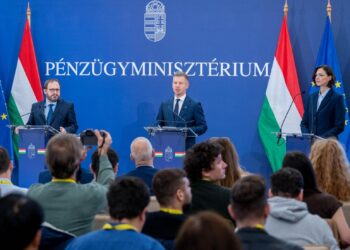
With a new government under Prime Minister Péter Magyar, the institutional future of the NFI is uncertain. Commitments have slowed, long-term financing decisions are on hold, and producers are watching closely.
For an industry that operates on multi-year planning cycles, even short-term instability can ripple outward. As seen in other markets, predictability often matters more than incentive size.
The Missing Value Layer
If Hungary’s biggest strength is production, its biggest weakness may be everything that comes after.
High-value segments like VFX, post-production, and IP ownership largely remain outside the country. Projects shoot in Budapest—but finish in London, Vancouver, or Sydney.
That gap has long-term consequences. Service production creates jobs, but ownership creates wealth. Without a stronger foothold in IP and post-production, Hungary risks staying locked into the lower-margin segments of the value chain.
Labor and Sustainability Pressures
The growth hasn’t come without strain.
Crew shortages in specialized roles, 12–16 hour workdays, and weak union representation are increasingly part of the conversation. At the same time, sustainability—once a nice-to-have—is becoming a competitive requirement.
Studios like Origo have made early moves with solar infrastructure, but industry-wide green standards remain underdeveloped. As European incentives begin integrating sustainability bonuses, Hungary may need to adapt quickly to stay competitive.
Moment of Recalibration
What makes this moment particularly significant isn’t just the political transition—it’s the convergence of pressures.
- Hollywood production cycles are becoming more volatile
- Streaming platforms are pulling back from peak-spend strategies
- AI and virtual production are reshaping cost structures
- Competing territories are refining their incentives
Hungary’s current model—high-volume, service-driven, cost-competitive—has proven incredibly effective. But it may not be sufficient for the next decade.
The Road Ahead
The opportunity, however, is real.
With targeted policy shifts—VFX incentives, green bonuses, IP development frameworks—Hungary could move up the value chain without sacrificing its core strengths.
The question isn’t whether the country can remain a top-tier production hub. It’s whether it can become something more: a place where global content isn’t just shot, but shaped and owned.
For Hollywood, the takeaway is straightforward. Hungary isn’t going anywhere—but the terms of engagement might evolve.
And in a business where margins, incentives, and infrastructure drive decisions, those shifts matter.
About the author:
Mihály Tóth is a Budapest-based strategist and business consultant, best known for his 15-year tenure as Head of Marketing at Origo Studios, one of Central Europe’s leading production hubs. With deep ties to both the Hungarian and international production landscape, he has played a role in positioning Hungary as a premier destination for Hollywood and streaming projects. Tóth is also the founder of Budapest Reporter and a founding member of MODIV (Mozgóképipari Divízió), where he focuses on industry analysis, policy, and the evolving dynamics between service production and national film culture.