CHINA Edition
 Hungarian Edition


The 30 Percent Tax Rebate Remains Secure
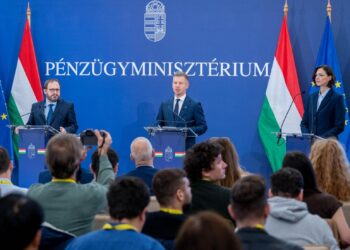
For international producers and financing partners, the distinction is critical. Hungary is not shutting down support mechanisms; rather, it is pausing forward-looking commitments that typically underpin development pipelines, especially in co-productions that require multi-year planning. In practical terms, this could delay greenlights for projects seeking Hungarian participation beyond the immediate future.
However, the cornerstone of Hungary’s appeal to global productions—the 30 percent tax rebate—remains in place for now.
The NFI confirmed that indirect support will continue as long as it fits within the budget framework defined by the government for the first half of 2026. This framework caps eligible production spending at approximately 140 billion forints during that period. For producers already budgeting projects in Hungary, this continuity is a key signal of stability.
As long as the rebate remains accessible, Hungary retains its position among Europe’s top-tier production destinations.
Budapest Operating at Full Studio Capacity
And by most measures, the industry is operating at full capacity.
The NFI points to significant expansion over the past five years, with the volume of the Hungarian film industry increasing fivefold and exceeding 300 billion forints annually. The sector now provides employment for around 20,000 professionals, reflecting the scale of infrastructure and workforce development that has taken place.
Budapest’s studio capacity, skilled crews, and production service companies have all expanded to meet rising global demand. This growth has positioned Hungary as a central player in the European production landscape, widely considered second only to London in terms of volume and capability.
A Slate of High-Profile Hollywood and Streaming Productions
The current production slate reinforces that status.
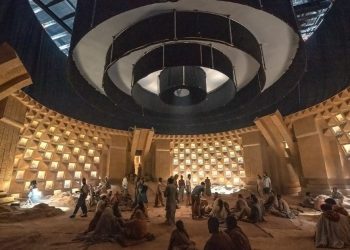
Denis Villeneuve’s “Dune: Part Three” is among the most high-profile projects shooting in Hungary, bringing together a cast that includes Timothee Chalamet, Zendaya, Austin Butler, Josh Brolin, Javier Bardem, Rebecca Ferguson, and Anya Taylor-Joy. The country is also hosting work on “Dune: Prophecy” Season 2, starring Emily Watson, Travis Fimmel, and Ralph Fiennes.
Streaming platforms continue to invest heavily in Hungarian production capacity. “3 Body Problem” is filming additional seasons with Rosamund Pike, Benedict Wong, and John Bradley, with production expected to continue through 2027. Meanwhile, “The Day of the Jackal” Season 2, starring Eddie Redmayne, is also in production.
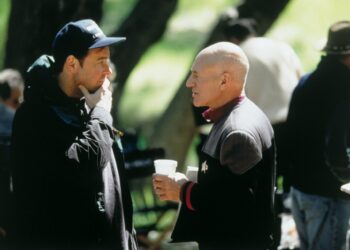
Other major projects further underscore Hungary’s versatility. Adam Driver and Anne Hathaway are attached to “Alone at Dawn,” while Emilia Clarke leads “Ponies.” Auteur-driven productions are also present, including “The Entertainment System Is Down,” starring Keanu Reeves and Kirsten Dunst. Even commercial franchises are entering the mix, with John Cena attached to “Matchbox.”
This consistent influx of high-profile productions highlights a fundamental reality: Hungary’s appeal extends beyond financial incentives. Industry leaders have long pointed to the country’s combination of safety, experienced crews, and world-class facilities as key competitive advantages.
Csaba Kael previously emphasized that Hungary’s rise is rooted in deep expertise, describing the country’s filmmaking tradition as a kind of “special DNA” built on more than a century of accumulated knowledge.
The Rise of Independent Hungarian Filmmaking
At the same time, the broader creative landscape tells a more nuanced story.
In recent years, some of Hungary’s most internationally acclaimed films have been produced outside the state funding system. Gabor Reisz’s “Explanation for Everything,” Flora Anna Buda’s animated short “27,” and Balint Szimler’s “Black Dot,” which won three awards in Locarno, all achieved success without direct state support.
Their emergence raises ongoing questions about the balance between institutional funding and independent filmmaking energy. While the NFI has played a central role in scaling the industry, the global recognition of independently produced works suggests a parallel creative ecosystem operating with its own momentum.
Looking Ahead: Resilience and Global Relevance
For now, the focus remains on how the current transition will shape near-term decision-making.
In the short term, projects requiring long-term state participation may face delays as producers wait for clarity from the incoming government. Development pipelines could slow, particularly for international co-productions that rely on predictable public financing structures.
However, the overall production engine shows little sign of slowing. With the tax rebate still active, studio space in high demand, and major franchises already mid-shoot, Hungary’s production ecosystem continues to operate at a high level.
This moment may ultimately serve as a test of the industry’s resilience. Can Hungary maintain its position as a leading production hub through political change?
So far, the answer appears to be yes.
The larger question for the global film business is not whether Hungary will remain relevant, but how the next government will choose to shape a sector that has become increasingly central to both European and Hollywood production strategies.