CHINA Edition
 Hungarian Edition


Hungary has taken a significant step in strengthening its film production infrastructure with the expansion of the National Film Institute’s studio complex in Fót.
The multi-year development, launched in 2020 as a high-priority investment, has added four new soundstages covering a total of 10,000 square meters, along with 20,000 square meters of service facilities and 135,000 square meters of green space. The project increases Hungary’s total studio capacity by 22%, offering new opportunities for both domestic and international productions.
The expansion reflects the steady growth of Hungary’s film industry, which has become one of the most sought-after production destinations in Europe. Over the past decade, the country has hosted numerous high-profile international productions, attracting major studios and globally recognized actors. In recent years, films and series featuring stars like Emma Stone, Mark Ruffalo, Willem Dafoe, Mel Gibson, Zendaya, Timothée Chalamet, Cate Blanchett, and Angelina Jolie have been shot in Hungary, underscoring its reputation as a competitive filming location.
The industry’s economic impact has also been substantial. With a history spanning over 120 years, Hungarian film production has become an integral part of the international market. The sector’s annual revenue has grown nearly fivefold since 2018, reaching close to $1 billion, thanks in large part to ongoing investments in film infrastructure. The expansion of the Fót studio complex further reinforces this growth, ensuring that Hungary remains an attractive destination for global filmmakers.
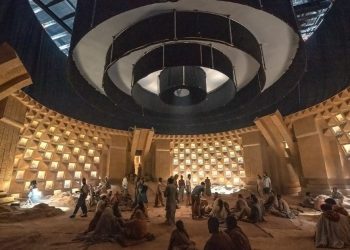
The new facilities include a state-of-the-art 5,000-square-meter soundstage with an 18-meter ceiling, making it one of the largest in the country. The design allows for flexible production needs, with two of the four new studios featuring mobile soundproof walls that can be combined into a single large unit. This adaptability is expected to accommodate major film and television productions, including large-scale historical dramas and action sequences.
(Source: NFI)