CHINA Edition
 Hungarian Edition


Budapest has spent the last decade quietly climbing the global production ranks, doubling for cities from Buenos Aires to Berlin while hosting tentpole films and prestige television. But according to producer Ivett Havasi, the country’s most important production credit may still be ahead of it.
Speaking from Los Angeles, where she has built a career across the independent film landscape, international co-productions and development-driven projects, Havasi sees Hungary at a pivotal crossroads — one that extends far beyond tax rebates and studio capacity.
“From Los Angeles, the Hungarian film industry looks like an interesting duality,” Havasi tells Budapest Reporter. “There is real strength behind it — the rebate system, the crew base, the infrastructure — but it is also heavily exposed to global production cycles. When Hollywood slows down, Budapest feels it immediately.”
That duality defines Hungary’s current position. Often described as “Europe’s #2 production hub” after the UK, the country has built a reputation for world-class execution and reliability. But Havasi argues the label, while accurate, misses the bigger picture.
“My problem with that title is that it’s true, but it doesn’t tell the full story,” she says.
“We are delivering world-class execution. But right now, we’re a bit like ‘Hippolyt, the butler’ — we serve major productions flawlessly, but we’re not sitting at the head of the table.”
The IP Gap
For Havasi — whose recent credits include Nuremberg (2025) as co-producer and Slingshot (2024) as executive producer, alongside earlier films like Beneath the Leaves, Counterpunch, and Ring Ring — the next evolution is clear: ownership.
“The service model is perfectly rational in the short term,” she says. “Long term, it’s a dead end. The real value is not in execution, it’s in IP.”
It’s a philosophy rooted in her own career trajectory. In the U.S. system, producing is inseparable from development and financing — a reality she encountered from the very beginning.
“My first film was made for $90,000. I had to find the story, the director, the cast, the financing — and sell the film,” she says. “In return, the IP remained under my control. In Hollywood, this isn’t strategy — it’s the foundation of being a producer.”
That development-first mindset now informs her role as president of the Hungarian-American Zukor Foundation, where she is working to build a bridge between the Hungarian and U.S. industries.
“The goal is to move the Hungarian industry toward long-term IP building,” she explains.
“There are strong stories and IP foundations in Hungary. The problem is they’re not yet translated into the language Hollywood understands.”
Trust as Currency
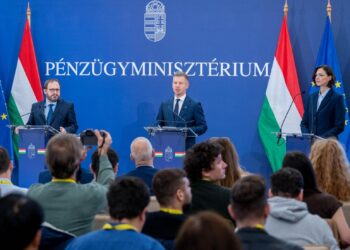
That conversation is landing at a decisive political moment. With Hungary entering a new era under Prime Minister Péter Magyar — and with Zoltán Tarr appointed to oversee the country’s creative industries — the film sector finds itself at a strategic inflection point.
For the first time in years, there is an open question about how the next phase of growth will be defined: whether Hungary doubles down on its successful production services model, or uses this reset to reposition itself as a creative force with meaningful ownership in global content. For industry insiders, this leadership shift is more than a political headline — it is a narrow window to recalibrate policy, stabilize incentives, and build the frameworks that could finally move Hungary from reliable vendor to true market player.
If IP is the long game, trust is the immediate one. When American partners raise questions about Hungary’s post-2030 rebate stability, Havasi is direct.
“Every rebate system is a political decision. There are no permanent guarantees — not even in Hollywood,” she says. “What you can sell is track record. Hungary has maintained this system consistently for over a decade.”
But she is equally clear about the risks.
“In the global film industry, reputation is not a soft factor — it’s currency. This trust has to be protected like a diamond. If predictability or reliability wavers even for a moment, studios will immediately start looking for alternative hubs.”
That warning comes at a sensitive moment. As Hungary enters a new political era under Prime Minister Péter Magyar and creative industries minister Zoltán Tarr, industry stakeholders are closely watching whether stability will be reinforced — or tested.
Mihály Tóth, head of marketing at ORIGO Studios, recently framed the challenge in stark terms:
“A film industry today is one of Hungary’s best-performing export sectors — the task is not to transform it, but to depoliticize it, stabilize it, and build the next layer of development onto it: intellectual property, post-production, and professional talent pipelines.”
Talent — and the Invisible Drain
Even as production volume remains strong, Havasi points to a less visible issue: where creative value accumulates.
“The ‘hidden brain drain’ is very real — just not obvious,” she says. “The best Hungarian professionals are applying their knowledge and creativity to service films, not domestic IP.”
In the short term, the decision makes sense — bigger budgets, steady work, global exposure. But the long-term cost is harder to quantify.
“The know-how is not converting into original content. That’s the real loss.”
Technology Shift
Looking ahead, Havasi sees technology as both disruption and opportunity. Virtual production and AI, she argues, will fundamentally reshape the producer’s role within the next five years.
“The emphasis will shift from traditional production management to technological and creative decision-making,” she says.
Hungary, she adds, is not lacking in VFX capability — but rather in positioning within the global workflow.
“The difference is not in talent or quality. It’s in the type of work that stays in Budapest. Large productions often bring VFX back to Hollywood because supervisors don’t want to spend another three to six months abroad.”
Learning from Global Models
For Hungary to evolve into a true creative center, Havasi points to international examples — particularly the UK.
“The British model is especially relevant because it balances state incentives with private capital while maintaining creative control and international competitiveness,” she says.
More broadly, she identifies a defining distinction.
“The countries that become true creative centers don’t just serve — they initiate.”
A Narrow Window
If the industry’s next phase hinges on policy, Havasi is unequivocal about priorities.
“Three things need to happen by 2030,” she says.
“Stabilize the tax incentive. Build Hungarian IP consistently. And create a development financing system that doesn’t depend on a single source.”
Asked for the most urgent step, her answer is immediate.
“The rebate must be stabilized immediately. This is not a price competition — it’s a trust issue.”
She also points to a practical gap in the ecosystem.
“There’s still no Hungarian film office in Hollywood,” she notes. “Producers say the nine-hour time difference and language barriers make collaboration difficult.”
The Zukor Foundation is already working to address that gap, with long-term plans to establish a physical presence and deepen ties — potentially including partnerships with legacy studios such as Paramount, which has historic Hungarian roots.
The Bridge Builders
If Hungary’s next chapter depends on structural change, it will also depend on individuals who can operate across systems. Havasi — a Producers Guild of America member with a background in economics, casting, and production finance — positions herself precisely in that role. Her credits span feature films, television (Two Minutes to Midnight), and music content, including St. Vincent’s Daddy’s Home, with multiple projects currently in post-production.
Her producing philosophy — “Creative Vision with a Financial Spine” — reflects a balance of discipline and creative ambition.
“I take every line item seriously — even a $5 Starbucks receipt,” she says. “Not because it defines the budget, but because that discipline defines every other decision.”
In an industry often driven by optimism, Havasi leans into transparency.
“If a film is not going to be financially profitable, I say it upfront,” she adds. “The investor deserves to know exactly what they’re investing in.”
What emerges from Havasi’s perspective is that her contribution to the Hungarian film industry goes well beyond advocacy — it is structural and hands-on. Through her work with the Zukor Foundation, she is actively developing internationally viable Hungarian IP, mentoring early-stage projects, and helping translate local stories into a format that can travel within the Hollywood system. At the same time, her collaboration with production partners such as Black Swan positions her as a conduit for U.S. producers navigating the Hungarian landscape, ensuring that inbound productions have a seamless experience — and, crucially, return. In practice, Havasi operates on both sides of the equation: building outbound creative ownership while reinforcing inbound trust. It’s a dual strategy that reflects a broader thesis — that Hungary’s path to becoming a true industry player will depend not just on policy shifts, but on globally fluent producers who can align development, financing, and production across borders.
Why This Moment Matters
Hungary’s film industry has already proven it can deliver scale, efficiency and reliability. The question now is whether it can translate that into creative ownership — and whether policy, capital and talent will align to support that shift.
As Havasi makes clear, the opportunity is real — but time-sensitive.
“This is not about pride,” she says. “It’s about position.”
With new political leadership, growing industry momentum, and increasing calls for stability and IP development, Hungary may be entering its most consequential phase yet — one that will determine whether it remains a world-class service hub, or emerges as a global content player.