CHINA Edition
 Hungarian Edition


In an industry increasingly defined by mobility—of talent, capital, and technology—Eurocine Budapest 2026 arrives in Budapest at a pivotal moment. Scheduled for May 8–9 at Hungexpo, the event is less a traditional trade show and more a cross-disciplinary summit aimed at unifying the fragmented worlds of cinema, television, streaming, and emerging formats under one European roof.
For Hungary, the timing is strategic.
Long regarded as a go-to service destination for Hollywood productions, the country is now actively reshaping its identity—from backlot to brain trust. Eurocine Budapest is part of that recalibration, positioning Budapest as a meeting point for global craft, innovation, and policy conversations.
 A Hub in the Making
Hungexpo’s selection as the host venue underscores the scale of ambition. Backed by SCS Concepts and Exhibitions Ltd and Hungexpo, and supported by partnerships with regional film commissions, schools, and cultural institutes, Eurocine is designed as both a showcase and a statement: Hungary is no longer just facilitating production—it’s helping define its future.
This aligns with broader industry trends. As production costs rise in traditional centers and streamers demand scalable infrastructure, Central Europe has become increasingly attractive. Hungary, with its robust tax incentives, experienced crews, and expanding studio capacity, sits at the center of that equation.
Eurocine leans directly into this narrative, with dedicated sessions on Hungary’s service industry and financing solutions for incoming productions, including insights into local lending structures and accelerated rebate payouts.
Where Craft Leads the Conversation
Unlike market-driven expos that prioritize gear over people, Eurocine is explicitly craft-first. The programming reflects a deep respect for below-the-line disciplines—cinematographers, gaffers, editors, colorists—whose workflows are rapidly evolving.
The involvement of the IMAGO Technical Committee signals serious industry weight, anchoring sessions that dive into the technical backbone of modern filmmaking:
- Gamma and log encoding for digital cinema
- Metadata standardization across camera systems
- Noise performance in next-gen cameras
Panels like “Creative Triangle – Relationship between Actors, Directors, Cinematographers” highlight the collaborative dynamics shaping visual storytelling, while hands-on workshops in lighting and color reinforce the event’s practical orientation.
 Tech Check: AI, Virtual Production, and the New Pipeline
If Eurocine has a central thesis, it’s that technology is no longer a silo—it’s the language of the entire production ecosystem.
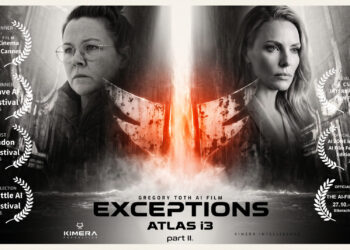
The AI Mini Summit—titled “Checking in on AI in 2026”—reflects a maturing conversation. Rather than speculative hype, the focus is on real-world integration, particularly in color pipelines, image processing, and post workflows.
Elsewhere, sessions on virtual production explore how VP is moving beyond blockbuster use cases into mainstream adoption, with an emphasis on integrating workflows into traditional production models.
Color science also takes center stage, with discussions around ACES, laser projection, and look development beyond LUTs. For LA-based professionals, these are not abstract concerns—they’re the standards shaping global deliverables.
Sustainability Moves from Buzzword to Baseline
Eurocine 2026 also reflects a broader industry shift: sustainability is no longer optional.
Panels organized by Green Film Shooting tackle everything from eco-friendly energy supply to supply chain logistics and the risk of “greenwashing.” The inclusion of sessions like “Going Green without Greenwashing” suggests a more rigorous, accountability-driven approach.
Equally notable is the focus on mental health and wellbeing, with dedicated discussions on set culture. As production scales globally, these conversations are becoming essential—not peripheral.
The Incentive Arms Race
One of the more pragmatic threads running through the symposium is the competitive landscape of tax incentives.
Eurocine brings together case studies and presentations from across Europe and beyond—Romania, Serbia, Bulgaria, Italy, and South America—offering a comparative look at rebate structures and financing ecosystems.
For producers, this is where theory meets bottom line. Hungary’s presence in this lineup isn’t incidental—it’s a direct pitch to remain competitive in an increasingly crowded field.
A Broader Lens on Representation
Diversity isn’t treated as a side panel—it’s embedded in the programming.
Sessions like “The Female Gaze” and “Succeeding as a Woman Cinematographer in China” expand the conversation beyond Western-centric narratives, while panels on Eastern European cinematography spotlight regional voices often underrepresented in global discourse.
This internationalism is key to Eurocine’s identity. It’s not just about bringing Hollywood to Budapest—it’s about creating a multi-directional exchange of ideas.
 Why It Matters
Eurocine 2026 arrives at a moment when the global production map is being redrawn. For Los Angeles-based professionals, the message is clear: Europe—and particularly Hungary—is not just a cost-saving alternative, but a fully creative ecosystem.
Budapest’s play is subtle but significant. By investing in education, infrastructure, and high-level discourse, it’s positioning itself as more than a location—it’s becoming a node in the global production network.
If Eurocine succeeds, it won’t just elevate Hungary’s profile. It could help redefine how—and where—the future of filmmaking gets built.